
How to Hunt Hogs: A Practical Guide
Table of Contents
- How to Hunt Hogs: Core Methods That Work
- Best Caliber for Hog Hunting and Ballistics
- Scouting for Wild Hogs: Finding Sign and Sounders
- Shot Placement for Wild Boar and Field Dressing
Last Updated: August 26, 2026
How to Hunt Hogs: Core Methods That Work
Feral swine are intelligent, adaptable, and often nocturnal, success depends on matching your method to terrain and season. The three primary approaches are spot-and-stalk, ambush from a stand, and baiting, each effective under different conditions.
Spot-and-stalk works best during early morning or late afternoon when hogs move between bedding and feeding areas. Glass open hillsides and creek bottoms, then move slowly toward visible sounders while reading wind direction carefully. Ambush hunting from a tree stand or ground blind near wallows and established trails capitalizes on predictable movement. Baiting with corn concentrates hogs in one location, though it requires consistent replenishment and patience for nocturnal feeding windows.
The key difference between successful hunters and frustrated ones is understanding that hog behavior shifts with season and pressure. Off-season scouting reveals movement patterns that often remain consistent year to year. Pick one method matching your terrain and commit to it for several outings before switching tactics.
Best Caliber for Hog Hunting and Ballistics
The best caliber balances penetration, energy transfer, and practical accuracy. Hogs have thick shoulder shields and dense muscle, requiring rounds that drive deep and expand reliably. The .308 Winchester, .30-06 Springfield, and 7mm Remington Magnum are industry standards, delivering sufficient velocity and energy at typical hunting distances (peer-reviewed research).
For shotguns, 12-gauge slugs or buckshot are effective within 100 yards (fws.gov). Handgun hunters favor .44 Magnum or larger, but this requires exceptional marksmanship and close approach. Shot placement matters more than caliber, a well-placed round from a .243 Winchester outperforms a poorly placed magnum round.
Modern bonded or solid-copper bullets designed for larger game perform best. Avoid varmint rounds that fragment on impact. Test your load at the range before season and understand your rifle's point-of-aim at expected hunting distance.
Scouting for Wild Hogs: Finding Sign and Sounders
Scouting means learning to read the landscape for fresh rooting, wallows, and tracks. Hogs tear up soil searching for grubs and roots, leaving distinctive churned earth visible from a distance. Wallows, muddy depressions near water sources, are reliable indicators of sounder activity. Fresh tracks in soft soil tell you direction of travel and approximate timing.
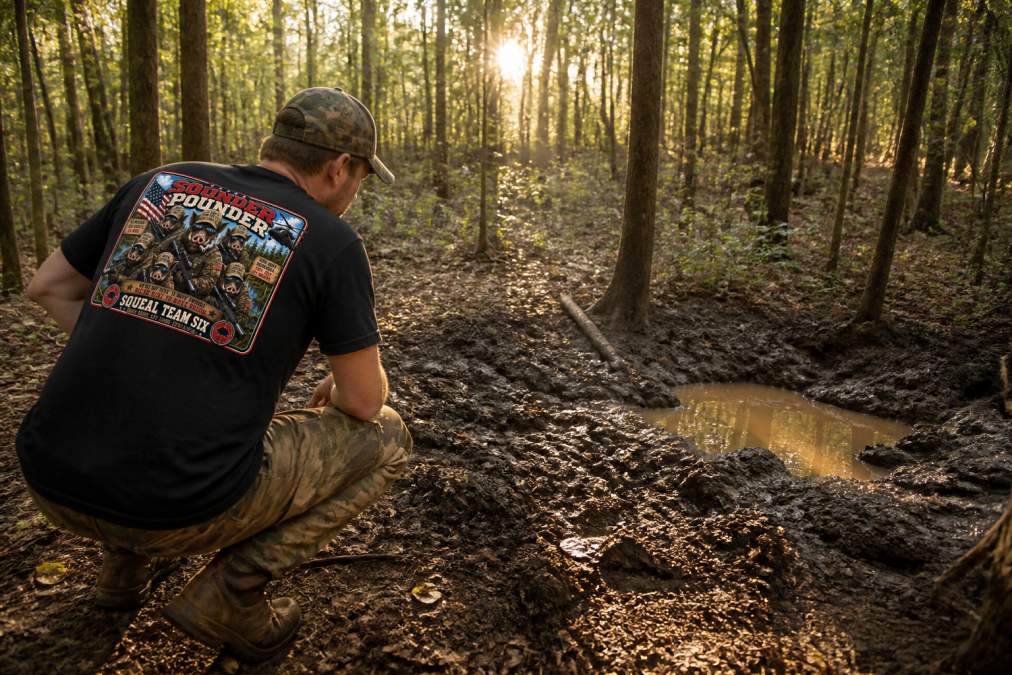
Walk creek bottoms, oak flats, and brushy transition zones. Look for scat, rubbed bark, and disturbed vegetation. A sounder of 10 to 20 hogs leaves obvious sign. Scout during midday when hogs bed down, dawn and dusk scouting risks spooking active animals.
Mark promising locations on a map or GPS unit. Return to the same spots over multiple trips to confirm presence and establish patterns. Hogs often use the same trails and feeding areas repeatedly, making consistency your advantage.
Shot Placement for Wild Boar and Field Dressing
Shot placement demands accuracy because the vital zone is smaller and better protected than in deer. Aim for the crease just behind the front leg, slightly above the midline, to penetrate the shoulder and reach the lungs. Quartering-away shots work if confident your round will drive through muscle to the lungs.
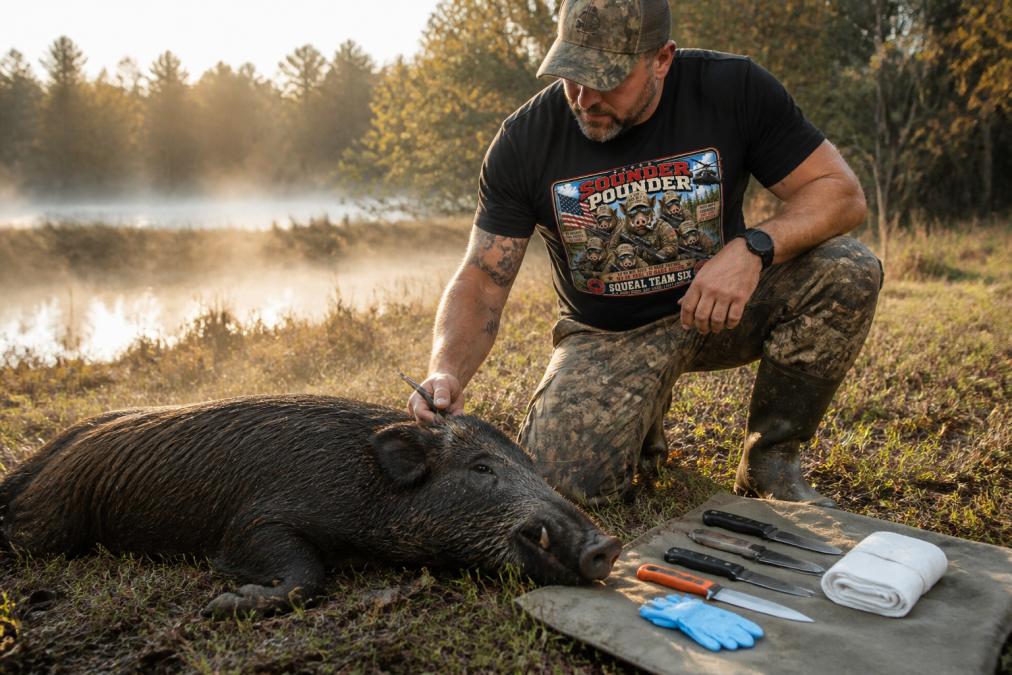
Head shots are risky, the skull is thick and angled, and a miss results in a wounded, dangerous animal. A solid hit on the vitals typically results in a quick death and minimal meat damage.
Field dress immediately after the kill. Open the body cavity carefully, remove organs, and cool the carcass quickly. Feral swine can carry disease, so wear gloves and avoid contact with internal organs (the CDC). Process meat within hours or cool the carcass in shade and process the following day.
Hunting hogs successfully comes down to method, patience, and respect for the animal. Whether you choose spot-and-stalk, stand hunting, or baiting, commit to learning your local terrain and hog behavior. Quality apparel designed for hunters keeps you comfortable during long sits and challenging conditions. American Predator Gear offers signature hunting shirts like the Squeal Team Six ($28.99) and Oinkin From The Boinkin ($28.99) that celebrate the hunting lifestyle. Shop American Predator Gear and represent the grit and humor of the hunting community.

Frequently Asked Questions
Q: What is the best time of day to hunt hogs?
A: Hogs are most active during dawn and dusk, but they hunt throughout the night and rest during midday heat. Early morning and late afternoon hunts offer the best light and activity levels. Night hunting with thermal optics has become popular for hog control, especially during warm months when daytime temperatures spike. Public land hunters often find less competition during these low-light windows.
Q: What attracts hogs fast?
A: Hog feeders baited with corn, protein pellets, and nutritional supplements draw sounders reliably. Hogs follow scent trails aggressively, so establishing a consistent baiting pattern creates predictable hunting windows. Fresh sign like rooting, wallows, and droppings indicate active areas. Wind direction matters: position yourself downwind so your scent doesn't spook incoming hogs before they reach your stand or blind.
Q: Do you need a license to hunt hogs?
A: Hunting regulations vary by state. Most states require a valid hunting license and may have specific hog seasons, bag limits, or weapon restrictions. Some states classify feral swine as invasive species with year-round hunting allowed on private land. Check your state's fish and wildlife regulations before hunting, requirements differ between public and private land, and between rifle, bow, and other methods.
This article was written using GrandRanker