
How to Layer for Bowhunting: The Complete Guide
Table of Contents
- The Three-Layer System for Bowhunting Explained
- Best Base Layers for Bowhunting: Merino Wool vs Synthetic
- Merino Wool vs Synthetic for Hunting: Which Wins?
- Bow-Specific Mobility Constraints: Layering Without Killing Your Draw
- The Hike-In Sweat Management Protocol
- How to Stay Warm in a Treestand Without Overheating on the Way In
- Why Cotton Fails Bowhunters and What to Wear Instead
- Budget-Friendly Layering Systems That Still Perform
Last Updated: August 19, 2026
The Three-Layer System for Bowhunting Explained
Knowing how to layer for bowhunting is the difference between a productive sit and a miserable one. Bowhunting creates layering demands that rifle hunters don't face: the draw cycle, the hike in, and stationary hours in a treestand each pull your system in different directions. Generic cold-weather advice doesn't cut it. You need a system built around the bow.
The three-layer system for bowhunting is a structured clothing approach that manages moisture, retains heat, and blocks weather while preserving the mobility and silence that archery hunting demands. Each layer has a specific job, and when one fails, the whole system falls apart.
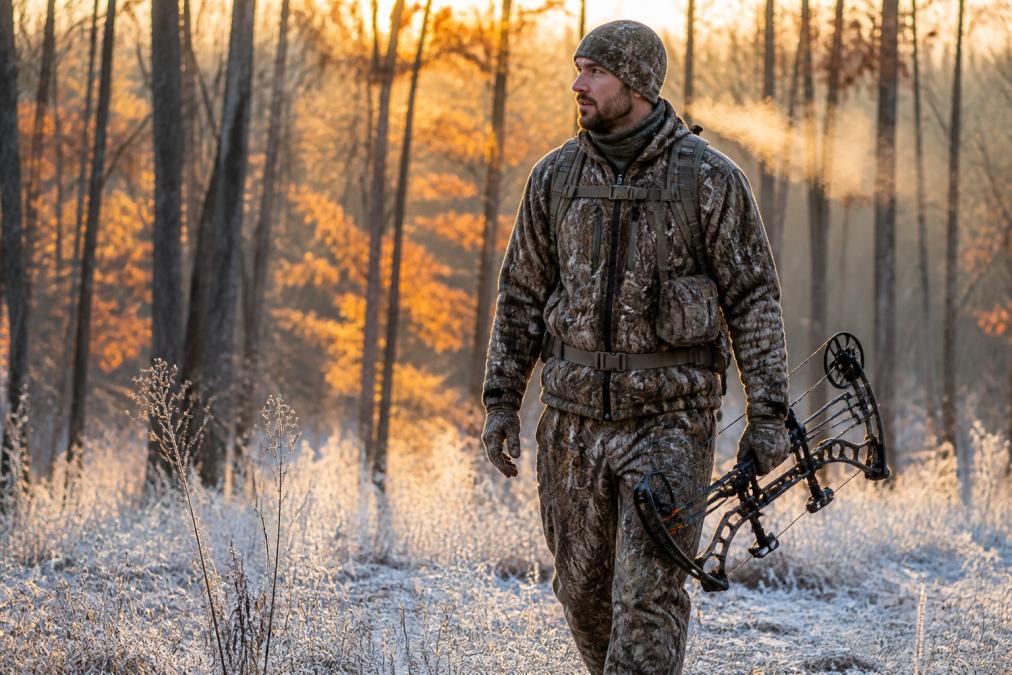
Base Layer: Moisture Management and Skin Contact
The base layer's only job is moisture management. It sits against your skin and moves sweat away before it can cool you down. A wet base layer in cold temperatures accelerates heat loss and increases hypothermia risk, according to the CDC's hypothermia prevention guidelines.
For bowhunting, base layer weight matters. Lightweight options work for active spot-and-stalk hunting. Midweight base layers suit cold stand hunting where you'll be stationary for hours. Moisture-wicking performance is non-negotiable, evaporation is the mechanism that keeps you regulated.
Mid Layer: Insulation and Heat Retention
The mid layer handles heat retention by trapping warm air close to your body while allowing moisture vapor to pass through from the base layer below.
Fleece is the most common mid-layer choice for bowhunters because it maintains loft even when damp, dries quickly, and compresses well. The biggest mid-layer mistake is choosing bulk over function. A thick, stiff insulating layer will restrict your draw cycle. Articulated fit in the shoulders and back is a requirement, not a luxury.
Outer Layer: Weather Protection and Scent Control
The outer shell must be windproof, ideally water-resistant with a DWR coating, and critically, it must be quiet. Hardshell jackets offer maximum protection but often crinkle with movement. For bowhunters, a softshell or brushed outer layer that moves silently is frequently the better trade-off. Scent control treatments add protection when you're within bow range.
The outer shell should never compress your mid layer and kill its insulating capacity. Fit it over your full layering system before you buy.
Best Base Layers for Bowhunting: Merino Wool vs Synthetic
The best base layers come down to two material families: merino wool and synthetic. Both wick moisture and manage heat, but they do it differently.
| Feature | Merino Wool | Synthetic |
|---|---|---|
| Moisture-wicking | Excellent | Excellent |
| Odor resistance | Outstanding (natural) | Moderate |
| Drying speed | Slower | Fast |
| Softness against skin | Very soft | Varies |
| Weight options | Light to heavy | Light to heavy |
| Durability | Moderate | High |
| Price point | Higher | Lower |
| Best for | Multi-day hunts, stand hunting | Active hunts, budget builds |
Merino Wool vs Synthetic for Hunting: Which Wins?
Merino wool wins for multi-day backcountry hunts and stand hunting where scent control matters most. Synthetic wins for high-output active hunting and budget-conscious builds.
Merino wool's natural odor resistance is significant. The fiber structure inhibits bacterial growth, so a merino base layer worn for three days smells better than a synthetic one, critical for bowhunters in close quarters with whitetail or elk. The trade-off is drying speed; wet merino takes longer to dry than synthetic.
Synthetic base layers excel at rapid moisture evaporation and are more durable and cost-effective, making them ideal for hunters covering ground aggressively.
Many experienced bowhunters run a synthetic base layer for the hike in and carry a merino layer to swap into once they reach the stand.
Bow-Specific Mobility Constraints: Layering Without Killing Your Draw
Most cold-weather layering guides ignore the draw cycle entirely. Adding three layers to your upper body fundamentally changes how your bow shoots.
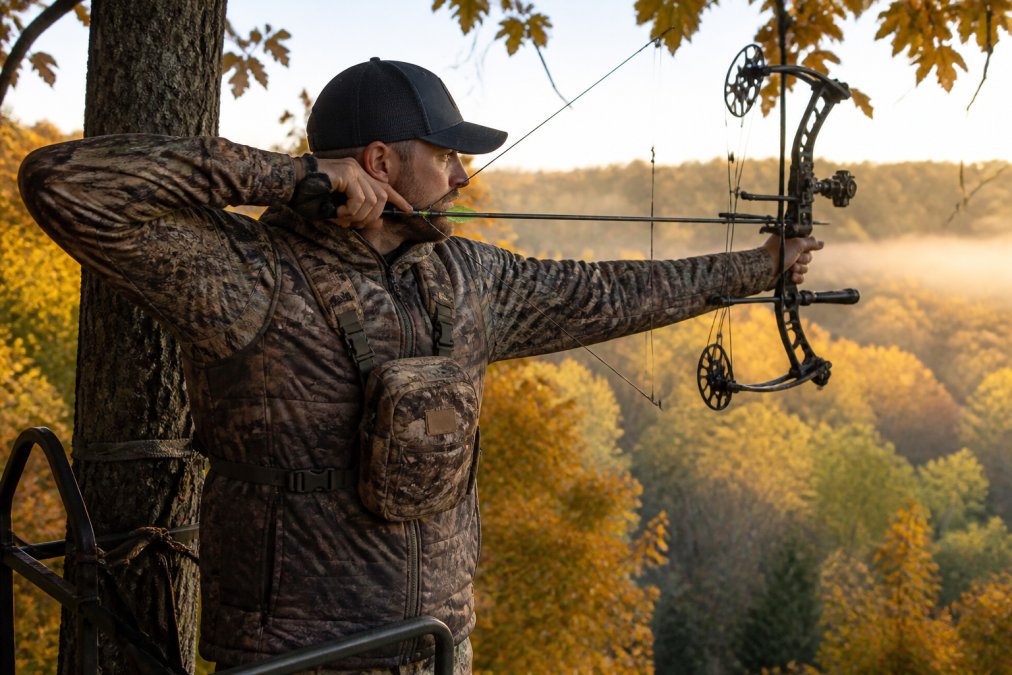
The draw cycle requires full shoulder rotation and back muscle engagement. Stiff, non-articulated layers restrict that rotation and can alter your anchor point and draw length perception. A single bulky mid layer can throw your shots off at 30 yards.
What to look for:
- Articulated fit: Seams designed to follow shoulder and elbow movement
- Stretch panels: Four-way stretch fabric in the back and underarm gussets
- Low-profile construction: Thinner layers that stack without adding shoulder bulk
- Sleeve length: Layers that stay in place at full draw without riding up
Test every layer combination at full draw before the season. If your draw feels different or your anchor point shifts, adjust the system.
The Hike-In Sweat Management Protocol
The hike-in is where most bowhunting layering systems fail. Hunters dress for the stand temperature, walk in hard, arrive soaked in sweat, and spend the first two hours shivering as moisture evaporates in cold air.
Step 1: Dress one layer lighter than you think you need. You'll be cold for five minutes but comfortable for the next four hours.
Step 2: Vent aggressively during the approach. Use pit zips, chest zips, and collar openings to keep your base layer from saturating.
Step 3: Slow down 10 minutes before the stand. Drop your pace to let your core temperature begin dropping before you stop.
Step 4: Add layers immediately when you stop. Trap residual body heat before it's gone.
Step 5: Carry a swap layer. A dry base layer in a zip-lock weighs almost nothing. Swapping a damp base layer for a dry one at the stand is the single highest-impact thing most hunters aren't doing.
According to the American College of Sports Medicine's guidance on exercise and cold weather, wet clothing and wind chill dramatically accelerate heat loss even at moderate temperatures.
How to Stay Warm in a Treestand Without Overheating on the Way In
Separate your approach system from your stand system. These are two different thermal environments, and treating them as one causes most cold-weather hunting misery.
Temperature-Based Layering Strategies for Stand Hunters
Stand hunting is stationary hunting. Your metabolic heat output drops significantly once you stop moving, so your layering system must compensate for the heat you're no longer generating.
| Temperature Range | Base Layer | Mid Layer | Outer Layer |
|---|---|---|---|
| Above 50°F | Lightweight synthetic | Light fleece or none | Softshell |
| 30°F to 50°F | Midweight merino or synthetic | Fleece jacket | Windproof softshell |
| 10°F to 30°F | Heavyweight merino | Insulated fleece + vest | Hardshell or insulated outer |
| Below 10°F | Heavyweight merino | Heavy insulating layer | Insulated hardshell + hand/foot warmers |
The outer layer for stand hunting can be heavier and less mobile than what you'd wear hiking, since you're not drawing until the moment of truth.
Footwear, Sock Layering, and Head and Neck Protection
Cold feet end hunts early. Run a moisture-wicking liner sock against the skin with a heavier insulating sock over it. This two-sock system manages moisture at the skin level while maintaining loft in the outer sock. A single thick sock compresses against the boot and loses insulating capacity.
Match your boot insulation to your expected temperature range and activity level, and add chemical or battery-powered foot warmers for extended sits in extreme cold.
A midweight merino or synthetic neck gaiter doubles as a face mask during the approach and pulls down to a collar on stand. Pair it with a fleece-lined hat or balaclava. The neck gaiter is the most underrated piece of gear in a cold-weather bowhunting kit.
According to the Wilderness Medical Society's cold injury prevention resources, extremity protection, feet, hands, face, and ears, is the primary prevention strategy for cold injury during prolonged outdoor exposure.
Why Cotton Fails Bowhunters and What to Wear Instead
Cotton has no place in a bowhunting layering system. Cotton absorbs moisture and holds it. A synthetic or merino base layer moves sweat away from your skin through wicking action. Cotton absorbs sweat, saturates, and stays wet. In cold conditions, a wet cotton layer accelerates heat loss and increases hypothermia risk.
What to wear instead:
- Base layer: Merino wool or moisture-wicking synthetic
- Mid layer: Fleece, synthetic insulation, or down (with moisture management)
- Outer layer: Windproof softshell or hardshell with DWR coating
- Socks: Merino wool or synthetic liner + insulating sock
- Headwear: Merino or synthetic fleece, never cotton
Budget-Friendly Layering Systems That Still Perform
Building a technical layering system doesn't require spending a fortune. The fundamentals, moisture management, insulation, weather protection, are achievable at multiple price points.
Prioritize spending on the base layer, which does the most critical work. A poor base layer undermines everything above it.
A practical budget build:
- Base layer: A midweight synthetic moisture-wicking base layer with four-way stretch and flatlock seams
- Mid layer: A basic fleece pullover or jacket. The performance gap between budget and premium fleece is smaller than marketing suggests.
- Outer layer: A windproof softshell. Wind resistance matters more than waterproofing for most bowhunting applications.
Don't cut corners on sock layering, footwear insulation, and headwear. These high-impact, low-cost components punch well above their weight.
For the apparel that goes over all of it, American Predator Gear designs clothing built by hunters for hunters, with exclusive seasonal drops that capture the real culture of the outdoors. The technical layers go underneath. The identity goes on top.
For additional guidance, the REI Expert Advice on layering for outdoor activities provides a solid framework that translates well to hunting-specific applications.
Bowhunting in cold weather rewards preparation and punishes shortcuts. A system that manages sweat on the approach, retains heat in the stand, and preserves full draw mobility is not complicated to build, but it requires deliberate choices at every layer. American Predator Gear outfits hunters who take the craft seriously, with designs that honor the lifestyle and gear built to handle what the field actually demands. Shop the current collection and represent your passion for the wild the right way.
Frequently Asked Questions
What is the 3-layer rule for bowhunting in cold weather?
The three-layer rule means wearing a moisture-wicking base layer against your skin to pull sweat away, an insulating mid layer such as fleece or a synthetic fill to trap body heat, and a windproof or waterproof outer shell to block wind and precipitation. Each layer does a specific job. Skipping one forces the others to compensate, which they cannot do well. For bowhunting specifically, every layer must also allow a full, unrestricted draw cycle at the anchor point.
What is the best base layer for archery hunting?
Merino wool and moisture-wicking synthetic base layers are the two best options for bowhunting. Merino wool regulates temperature naturally, resists odor for multiple wears, and stays warm even when damp. Synthetic base layers dry faster and cost less. For active spot-and-stalk hunting where sweat is constant, a lightweight synthetic base layer often performs better. For cold stand hunting with minimal movement, a midweight merino wool base layer keeps you warmer over a long sit.
How do you prevent overheating while hiking to a treestand?
The most effective method is to hike in wearing only your base layer and pack your mid and outer layers in your pack. Once you reach the stand and your heart rate drops, add layers before your body cools down. This stops sweat from saturating your insulating layers. Wet insulation loses most of its heat retention ability. If temperatures are extreme, a lightweight softshell as a hike-in layer lets moisture evaporate while blocking light wind during the approach.
What materials should you avoid when layering for bowhunting?
Avoid cotton in any layer. Cotton absorbs moisture and holds it against your skin, which accelerates heat loss and raises hypothermia risk in cold, wet conditions. It also takes a long time to dry. Stiff, non-stretch synthetics in the mid or outer layer can restrict your draw cycle at full extension. Avoid any outer shell fabric that crinkles or rustles loudly, deer and elk pick up that noise at close range, and a spooked animal at 20 yards erases every other preparation you made.
How does a proper layering system improve bowhunting success?
A proper layering system keeps your body at a stable temperature throughout the hunt, which directly affects how long you can stay in the field. Hunters who overheat on the hike in and then freeze on stand cut their sits short. Staying comfortable means staying longer, and more time on stand means more encounters. Thermal regulation also reduces fidgeting and unnecessary movement, which is critical at the close ranges bowhunting demands. A quiet, well-fitted system also eliminates the noise and bulk that can interfere with your shot.
What colors should you avoid for deer hunting?
Deer see in a limited color spectrum and are most sensitive to blue and UV light. Avoid blue jeans, bright white, and clothing washed in detergents with optical brighteners, which glow in UV light that deer can detect. Earth tones, browns, greens, and camo patterns work well. Blaze orange is required by law in most states during firearm seasons for safety, but check your state's regulations for bowhunting-specific requirements since rules vary.
This article was written using GrandRanker