
Where to Hunt Coyotes: A 2026 Field Guide
Table of Contents
- Where to Hunt Coyotes: Habitat, Terrain, and Stand Selection
- Coyote Hunting Public Land: Access, Maps, and Digital Scouting
- Coyote Scouting Techniques That Actually Produce Results
- Coyote Hunting Regulations by State: What You Must Know
Last Updated: August 20, 2026
Where to Hunt Coyotes: Habitat, Terrain, and Stand Selection
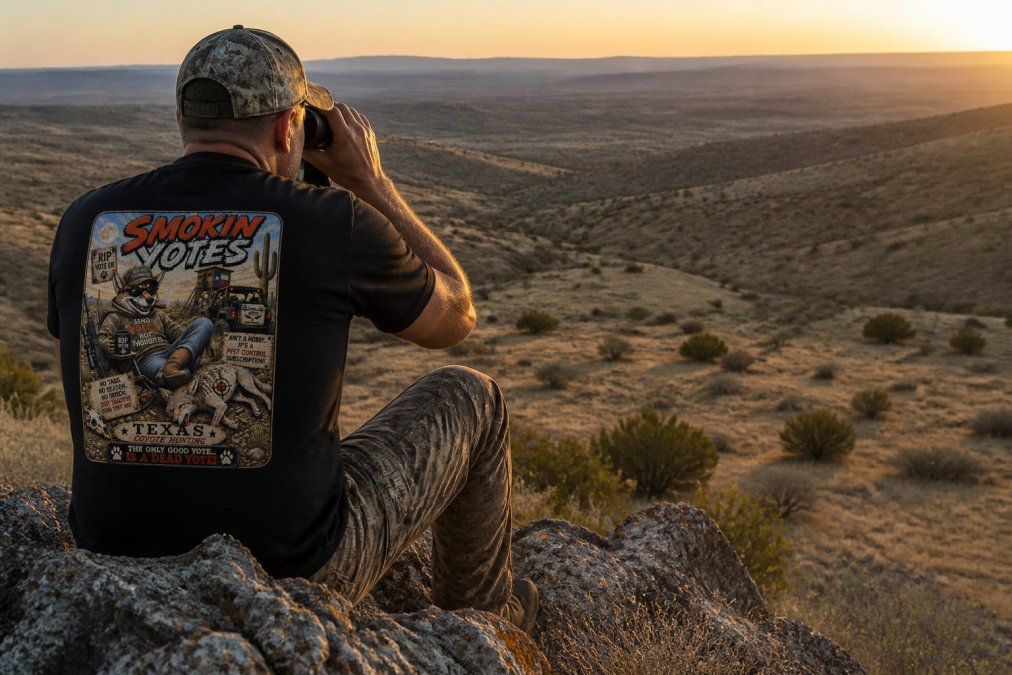
Coyotes thrive where two habitat types meet: timber bordering a picked cornfield, brushy creek bottoms cutting through open pasture, or cedar breaks dropping into flat grassland. These transition zones concentrate prey like rabbits and mice, which concentrate coyotes. Position yourself with the wind in your face and a clear downwind shooting lane on high ground when possible so you can see approaching dogs before they wind you. A ridge saddle overlooking two drainages is close to ideal.
Stand selection depends on time of year. During denning season in late winter and spring, coyotes are territorial and respond aggressively to challenge calls. In fall, juveniles are dispersing and will travel farther to investigate prey distress sounds.
| Season | Coyote Behavior | Best Call Type | Stand Location |
|---|---|---|---|
| Winter (Jan-Feb) | Breeding, territorial | Howls, challenge barks | Ridge overlooking multiple drainages |
| Spring (Mar-Apr) | Denning, pup-rearing | Pup distress, prey distress | Timber edges near open ground |
| Summer (May-Aug) | Family groups, prey-focused | Rabbit distress | Creek bottoms, agricultural edges |
| Fall (Sep-Dec) | Juvenile dispersal | Prey distress, coyote vocalizations | Transition zones, fence lines |
Coyote Hunting Public Land: Access, Maps, and Digital Scouting
Public land coyote hunting is one of the most accessible forms of predator management available to hunters without private land connections. According to Bureau of Land Management public land access guidelines, BLM land across the western states generally permits year-round predator hunting with a valid state license. National forests managed by the USDA Forest Service follow similar rules in most states, though individual ranger districts can impose restrictions. State Wildlife Management Areas vary widely, so always verify locally before you go.
The biggest mistake hunters make on public land is hunting pressure spots near trailheads. Coyotes on heavily pressured public land are call-shy. Go deeper. The half-mile buffer from road access is where most hunters stop; coyotes past that buffer see far less pressure.
Digital scouting workflow for public land:
- Start with USDA Forest Service motor vehicle use maps to identify legal road access
- Pull the land boundary layer in onX Hunt or similar mapping app to confirm public/private boundaries
- Identify drainages, creek bottoms, and habitat edges using satellite imagery
- Cross-reference topographic maps to find saddles and ridge lines that give elevation advantage
- Mark potential stand locations at least 400 meters apart for rotation options
Aerial imagery analysis is underused. Train your eye to spot subtle features: a brushy draw cutting through a grassy flat, a stock pond surrounded by timber, a fence line connecting two cover types.
Coyote Scouting Techniques That Actually Produce Results
Productive coyote scouting combines sign reading, topographic analysis, and behavioral pattern recognition. Night howling surveys before the season are one of the most reliable scouting tools available. Drive roads at dusk or dawn, stop every mile or so, and do a series of howls. Coyotes that respond tell you exactly where they're living.
Sign to look for on foot:
- Tracks in soft soil along creek banks and field edges
- Scat on high points like rock outcroppings and trail intersections
- Cached prey remains, often buried under light soil or leaves
- Worn travel paths through tall grass connecting cover patches
- Digging activity near rodent burrows in agricultural areas
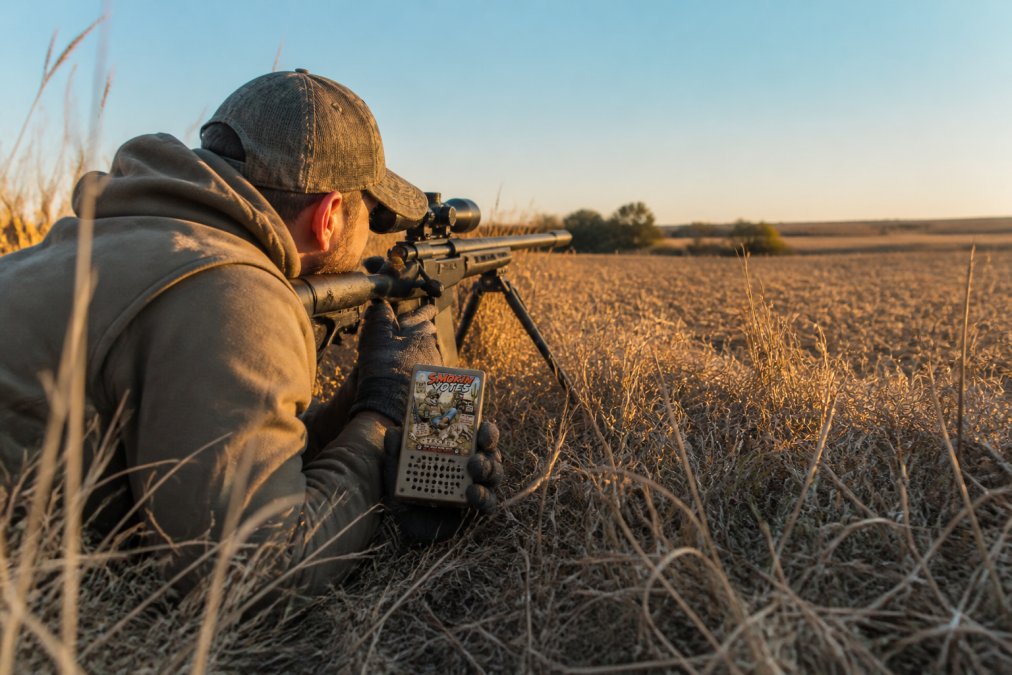
Scent control is non-negotiable for close-range stand hunting. Play the wind, period. Electronic calls let you place the sound source away from your position, drawing the coyote's attention away from where you're sitting. Pair an e-caller with a decoy and incoming coyotes focus on the decoy rather than scanning for the source. Running a thermal monocular at dusk to observe coyote movement patterns before you call reveals travel routes, group sizes, and individual behavior.
Coyote Hunting Regulations by State: What You Must Know
Coyote hunting regulations vary significantly by state. Most states permit year-round coyote hunting with no bag limit, but specific rules around night hunting, electronic calls, and method of take differ. According to state-by-state hunting regulations maintained by the Association of Fish and Wildlife Agencies, coyotes are classified as non-game or unprotected species in the majority of states.
Key regulatory categories to check before you hunt:
- Season dates: Many states have no closed season, but some restrict spring denning periods
- Night hunting: Legal in many states with permits; prohibited in others
- Electronic calls: Permitted in most states for coyotes but verify locally
- Bag limits: Most states have none
- License requirements: Some require only a hunting license; others require a specific predator permit
- Fur harvesting rules: Additional tagging and reporting requirements may apply
Texas, Kansas, Wyoming, Montana, and the Dakotas offer the most permissive regulations and highest coyote density. Texas deserves special mention: many ranchers actively welcome predator hunters because coyote management protects livestock and deer herds.
Always verify current regulations directly with your state wildlife agency before the season.
If you're heading out to hunt coyotes this season, the Yotes in Texas tee from American Predator Gear is built for hunters who run Texas country hard, and the Camo Long Sleeve in Realtree Colorblock is a moisture-wicking layer worth grabbing before your next stand.


Frequently Asked Questions
Where is the best place to hunt coyotes?
The best places to hunt coyotes combine open terrain with edge habitat: agricultural fields bordering timber, canyon country, and brushy draws in the Southwest and Plains states. Texas, Kansas, Wyoming, and the Dakotas consistently produce high coyote densities. Public land managed by the BLM and USFS gives access to millions of acres. Wherever prey like rabbits and rodents are plentiful, coyotes follow. Scouting topographic maps and aerial imagery beforehand will narrow down productive stand locations fast.
Can you hunt coyotes on public land?
Yes, coyote hunting on public land is legal across most of the country, though rules vary by the managing agency and state. BLM and National Forest land generally allow varmint hunting with few restrictions outside of designated wilderness areas. State wildlife management areas may require a hunting license or have specific season dates. Always check the specific land management unit's regulations before heading out, since rules on electronic calls, night hunting, and access can differ significantly from one parcel to the next.
What time of day is best for coyote hunting?
Early morning and late evening are the most productive windows, aligning with peak coyote activity at dawn and dusk. The first 90 minutes after first light and the hour before dark consistently draw the most responses to predator calling. During denning season in late winter and spring, midday stands can also pay off as adult coyotes range farther to feed pups. Night hunting, where legal, adds another productive option since coyotes are naturally nocturnal and thermal optics or night vision gear extends your shooting hours.
How hard is it to hunt coyotes?
Coyotes are among the most challenging predators to hunt consistently. They have sharp eyesight, exceptional hearing, and a nose that will bust your stand the moment wind direction shifts. Success depends on solid scouting, disciplined scent control, and varied predator calling sequences. New hunters often expect fast action and get discouraged after a few blank stands. The reality is that reading terrain, timing your calling cadence, and staying patient separates consistent hunters from those who go home empty-handed.
Coyotes are adaptable, pressured, and smarter than most hunters give them credit for. Finding productive ground takes a combination of digital scouting, on-foot sign reading, and an honest understanding of how coyote behavior shifts through the year. American Predator Gear's Smokin Yotes collection was built by hunters who run these dogs hard and want gear that holds up the same way. Shop the latest limited-edition drops and get out there with something worth wearing.
This article was written using GrandRanker