

Table of Contents
- More Than a Name: What 'Army Hunters' Really Means
- The Hunting Lifestyle Apparel That Tells Your Story
- Patriotic Hunting Gear for the Field and the Flag
- Beyond the Base: Finding Community and Support
- Safety and Regulations Every Army Hunter Should Know
- The Future of the Army Hunter Community
- Frequently Asked Questions
Last Updated: September 14, 2026
More Than a Name: What 'Army Hunters' Really Means
Type "army hunters" into a search bar and you'll get whiplash. One result points to a childhood cancer charity. Another points to a military airfield. A third points to a hunting television show. Three completely different worlds, one shared phrase, and no clear path to the one you actually meant.

At American Predator Gear, we hear the term used a different way: as shorthand for the men and women who served, then came home to a treestand, a duck blind, or a ridge line at first light. That's the army hunters we write for. This guide covers the lifestyle, the gear that tells your story, the community that keeps it alive, and the safety rules every hunter should know before opening day.
The Military Connection to the Field
Army hunters are hunters with a military background who carry the discipline, fieldcraft, and patience of service into the outdoors. The overlap isn't sentimental. It's practical.
Service teaches land navigation, noise discipline, and how to sit still for hours in bad weather. Those same skills decide whether a deer steps into your lane or winds you from forty yards out. A lot of veterans will tell you the transition felt natural, because a lot of hunting is just field operations with better scenery.
A Shared Identity
The phrase also describes something broader: a community bound by a love of the outdoors and a respect for the people who protected it. It shows up in unit stickers on truck tailgates, in callsigns shouted across a campfire, and in the humor that only people who've been in the field understand.
That identity is the whole reason we exist. It's the thread running through everything below.
The Hunting Lifestyle Apparel That Tells Your Story
Hunting lifestyle apparel is clothing built around the culture of the hunt, not just the hunt itself. It carries the inside jokes, the tag lines, and the pride that only make sense to someone who's been there.
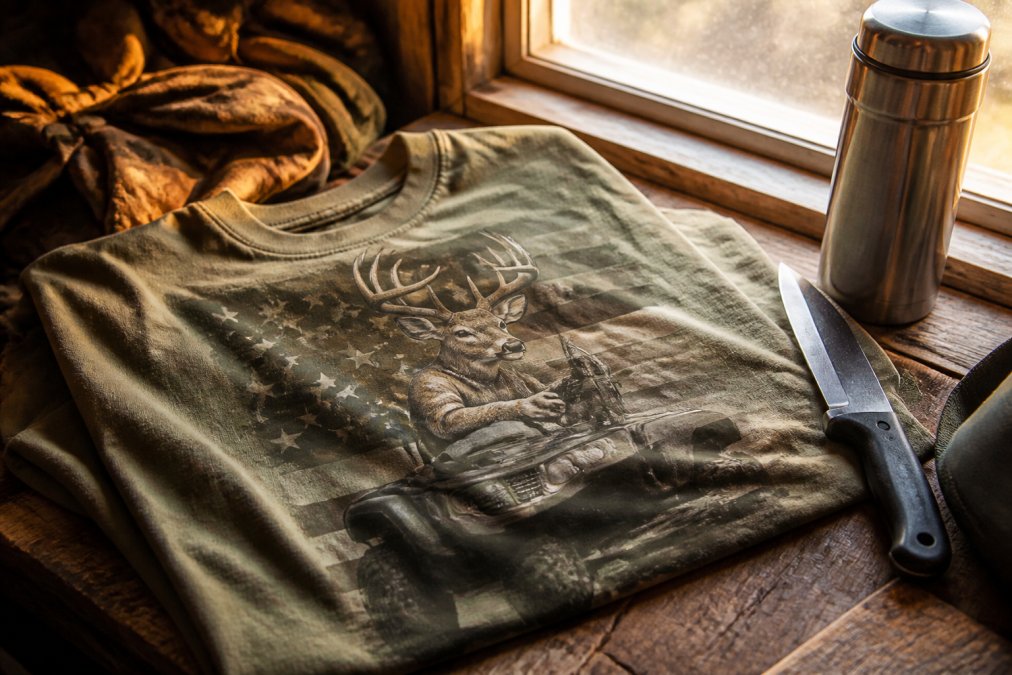
Here's the thing nobody tells you about this category: a lot of it is generic camo with a different word printed on it. Same blank, same cut, new slogan. If you hunt hogs, elk, and deer in the same family, one shirt isn't going to speak for all of you.
That's the gap we built around. Our designs are made by hunters, for hunters, and they get specific. A hog hunter isn't reaching for the same shirt as a coyote caller. Our Squeal Team Six tee leans into the tactical humor that hog hunters actually live by, while Yotes in Texas speaks directly to predator callers running the brush country. Different hunters, different tag lines, same soft 4.5 oz. cotton blank underneath.
The blanks matter too. We print on Gildan G640 Softstyle, a preshrunk ringspun cotton tee with a taped neck and shoulders and a tear-away label. Sizes run XS through 5XL. It's the kind of shirt you can wear to the feed store, the range, or the campfire without thinking about it.
A common mistake is buying hunting humor shirts from a print-on-demand shop with no quality control. Those prints crack after three washes. Ours are built to hold up, and the designs rotate monthly, so the one you're wearing usually isn't the one everyone else is wearing.
Patriotic Hunting Gear for the Field and the Flag
Patriotic hunting gear is apparel that pairs American pride with the hunting lifestyle, and it works because the two aren't separate for most of us. The flag and the field belong together.
Our Made In America tee says it without a paragraph of explanation. For service members and veterans, the branch tees go further: Army, Air Force, Marine, and Navy each run on the same soft cotton blank, so you can rep your branch without giving up comfort.


For colder mornings, the Camo Long Sleeve is a Russell Outdoors Realtree Colorblock Performance quarter-zip. It's 3.8-ounce 100% polyester with moisture-wicking fabric and a Realtree EDGE print, which makes it a legitimate layering piece for a dawn sit, not just a logo.
If you bowhunt, this is where gear choices get real. Bulky layers change your draw. Noisy fabric ruins a close encounter. A quiet, moisture-wicking base layer under a quarter-zip beats a heavy coat every time the temperature swings at first light.
Beyond the Base: Finding Community and Support
Community is the part of hunting that outlasts the season. It shows up in volunteer support for veteran programs, in fundraising initiatives for local families, and in the simple habit of showing up when someone needs a hand.
Here's the disambiguation problem nobody addresses: search "army hunters" and you'll land on three unrelated things. A childhood cancer charity that uses the name for its mission. A military airfield whose infrastructure pages dominate the results. And a hunting television show. If you came here for the outdoor lifestyle, you're in the right place, but it helps to know what else is out there so you don't donate to the wrong cause or drive to the wrong gate.
If you meant the charity: look for organizations that fund childhood cancer research and family support services. Verify their registration before donating. A patriotic name is not a mission statement.
If you meant the airfield: that's a military installation with runway and infrastructure specifications, a base directory, and contact information. Not a hunting resource.
If you meant the show: that's entertainment, not a community program. Enjoy it, but don't confuse it with a volunteer opportunity.
Now, the community that actually matters for hunters. Look for organizations doing real outreach in your area:
- Veteran hunting programs. Many groups run guided hunts for service members and veterans, often on private land or through state wildlife agency partnerships. They need volunteers for setup, guiding, and cooking as much as they need donations.
- Youth outdoor sports days. These events introduce kids to hunting, archery, and firearm safety. They run on logistics and people. Show up once, help with setup, and you'll know within an hour whether it fits.
- Conservation groups. Regional chapters of national conservation organizations run habitat projects, mentored hunts, and event coordination for new hunters. Their local chapters are usually the easiest entry point.
The easiest entry point is the one closest to you. A regional conservation chapter, a local rod and gun club, or a veteran outdoor program all run on logistics and people. Show up once, help with setup, and you'll know within an hour whether it fits.
Safety and Regulations Every Army Hunter Should Know
Safety and regulations are the non-negotiables, and they change by state. Hunter education certification is required in most states before you can buy a license, and the requirements vary enough that you should check your own state wildlife agency's page rather than trust a forum post.
The rules that trip people up most often:
- Blaze orange requirements. Many states mandate a minimum visible square-inch count during firearm seasons. Bowhunters are often exempt, but not always.
- Legal shooting hours. These are set by state, typically from a half hour before sunrise to a half hour after sunset. They shift through the season.
- Tagging and reporting. Some states require physical tags, others use an app. Know which one applies before you pull the trigger.
- Transport rules. How a harvested animal must be tagged and moved varies, and it's the most common honest mistake hunters make.
For federal land, check the managing agency's rules on top of state law. The U.S. Fish and Wildlife Service publishes refuge-specific hunting regulations, and the National Shooting Sports Foundation maintains state-by-state hunter education and safety resources worth bookmarking.
The Future of the Army Hunter Community
The community is getting younger and more connected. Social media turned solitary pursuits into shared ones, and a new hunter today can learn more in one season than hunters once learned in five.
That's mostly good. It also means the culture needs protecting. The humor, the traditions, and the respect for the animal and the land are what make this worth passing on, and they don't survive on their own. They survive because people keep showing up and keep teaching.
But there's a gap in most conversations about the future: safety and regulations. As more hunters enter the field, the rules matter more, not less. Here's what every army hunter should know before opening day.
Hunter education. Most states require certification before you can buy a license. The requirements vary. Check your state wildlife agency's page rather than trust a forum post. Some states offer online courses, others require a field day.
Blaze orange. Many states mandate a minimum visible square-inch count during firearm seasons. Bowhunters are often exempt, but not always. Know your state's rule before you sit.
Legal shooting hours. These are set by state, typically from a half hour before sunrise to a half hour after sunset. They shift through the season. A watch and a sunrise table are not optional.
Tagging and reporting. Some states require physical tags, others use an app. Know which one applies before you pull the trigger. Transport rules vary too, and that's the most common honest mistake hunters make.
Federal land. For federal land, check the managing agency's rules on top of state law. The U.S. Fish and Wildlife Service publishes refuge-specific hunting regulations, and the National Shooting Sports Foundation maintains state-by-state hunter education and safety resources worth bookmarking.
That's the part we take seriously. Every design we release is a small piece of that culture, made to be worn at the range, in the blind, and around the table after the hunt. The future of the army hunter community isn't just about new gear or new followers. It's about new hunters who know the rules, respect the land, and pass it on.
| What You're Looking For | Where It Shows Up | Why It Matters |
|---|---|---|
| Branch pride | Army, Navy, Air Force, Marine tees | Rep your service in the field |
| Hunting humor | Squeal Team Six, Dead is Dead | Inside jokes only hunters get |
| Predator focus | Yotes in Texas | Speaks to coyote callers |
| Cold-weather layering | Camo Long Sleeve quarter-zip | Quiet, moisture-wicking, bowhunt-friendly |
| Everyday patriotism | Made In America | Pride without the paragraph |
Frequently Asked Questions
Can you hunt while serving in the military?
Yes, many service members hunt in their off-duty hours, though it requires planning around deployments and training schedules. Some military installations offer structured opportunities for active-duty personnel and their families, which can include access to managed land.
What is the connection between military service and the hunting community?
The connection runs deep. Both require discipline, patience, and respect for the outdoors. Many veterans and active-duty personnel find that hunting provides a sense of purpose and calm that mirrors the focus they developed in service. Various veteran programs actively support this bond through events, mentorship, and shared outdoor experiences that help service members transition and connect with local hunters.
How does the hunting community support veterans and active-duty personnel?
Support comes in many forms. Non-profit organizations host guided hunts for veterans, provide gear donations, and offer volunteer support for military families. Community outreach programs coordinate events that bring together service members and local hunters. These initiatives not only honor their service but also create lasting bonds through a shared love of the outdoors.
What should I look for in patriotic hunting gear?
Look for durable materials, comfortable fits, and designs that reflect your values. American Predator Gear offers a range of shirts like the Made In America tee and the Squeal Team Six design, all printed on soft, long-lasting Gildan G640 cotton. These pieces are built for the field and everyday wear, letting you show your pride in the military and the hunting lifestyle without sacrificing quality or comfort.
The hardest part of the hunting lifestyle isn't the early alarm or the cold sit. It's finding gear that actually says what you mean, made by people who've been in the same blind. American Predator Gear builds limited-edition designs every month, printed on soft, durable Gildan G640 blanks, with signature lines like Sounder Pounder, Smokin Yotes, and Trash Panda that speak to specific hunters instead of everyone at once. Shop the collection and wear the story you actually live.