

Table of Contents
- How to Wash Hunting Gear Step by Step
- Choosing a Scent-Free Laundry Detergent for Hunters
- Removing Blood Stains from Hunting Apparel
- How to Restore DWR on Hunting Clothes
Last Updated: August 21, 2026
How to Wash Hunting Gear Step by Step
Knowing how to wash hunting gear correctly is the difference between gear that lasts a decade and gear that falls apart after two seasons. Mud, blood, sweat, and campfire smoke degrade fabric, kill DWR coatings, and alert every whitetail within 300 yards that you're in the woods.
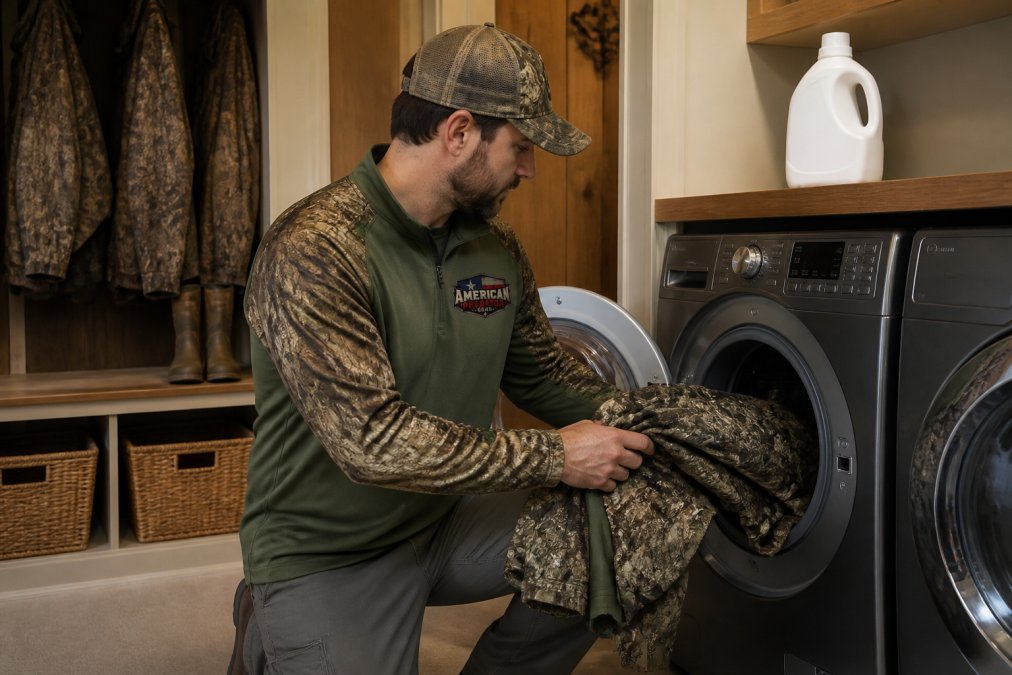
- Pre-treat stains first. Cold water and enzyme-free soap on fresh blood, mud, and sap work better than hot water.
- Turn garments inside out. This protects outer finishes, DWR coatings, and printed designs.
- Use a cold water cycle. Hot water breaks down synthetic fabrics and waterproof membranes.
- Run a gentle cycle. Bibs, jackets, and base layers don't need extra punishment.
- Add a second rinse cycle. Detergent residue creates scent; a second rinse eliminates it.
- Air dry whenever possible. Hang garments in a clean, scent-free space away from smoke or household odors.
Choosing a Scent-Free Laundry Detergent for Hunters
Most laundry detergents are designed to make your clothes smell good. For hunting apparel, that's exactly the problem.
Scent-free detergent for hunters is formulated without fragrance, UV brighteners, or dyes. UV brighteners make fabric glow under ultraviolet light, which deer can detect (peer-reviewed research). A standard "free and clear" detergent is NOT the same as purpose-built scent-free detergent for hunters.
What to look for on the label:
- Fragrance-free (not just "unscented")
- No UV brighteners
- Enzyme-free formula for delicate tech fabrics and merino wool
- Biodegradable ingredients if washing near water sources
Use about half the recommended amount. More detergent means more residue and more scent.
Removing Blood Stains from Hunting Apparel
Blood stains are a badge of honor in the field. Getting them out without wrecking the fabric requires one critical rule: cold water only. Hot water sets blood stains permanently (peer-reviewed research).
For fresh blood stains:
- Rinse immediately with cold water.
- Work enzyme-free soap or hydrogen peroxide into the stain with your fingers.
- Let it sit for five to ten minutes.
- Rinse again with cold water before washing normally.
For dried blood stains:
- Soak the stained area in cold water for 30 minutes.
- Apply a paste of baking soda and cold water directly to the stain.
- Let it sit for 15-20 minutes, then rinse and wash.
How to Restore DWR on Hunting Clothes
DWR, durable water repellent, is the coating on your hunting jacket and bibs that makes water bead up and roll off. When your outer layer starts "wetting out," your breathability tanks and you get cold fast.
Method 1, Heat reactivation (try this first): After washing normally, tumble dry on low heat for 20 minutes. Heat reactivates DWR that's been flattened by wear.
Method 2, DWR re-treatment: If heat reactivation doesn't work, apply a wash-in or spray-on DWR treatment designed for technical hunting apparel. Wash-in treatments work better for insulated pieces; spray-on treatments give more control for high-wear areas like shoulders and elbows.
Storing Hunting Gear in the Off-Season
The off-season is where most hunters make their biggest gear mistakes. Clean gear stored carelessly picks up household odors and moisture that breeds mildew.
Do this instead:
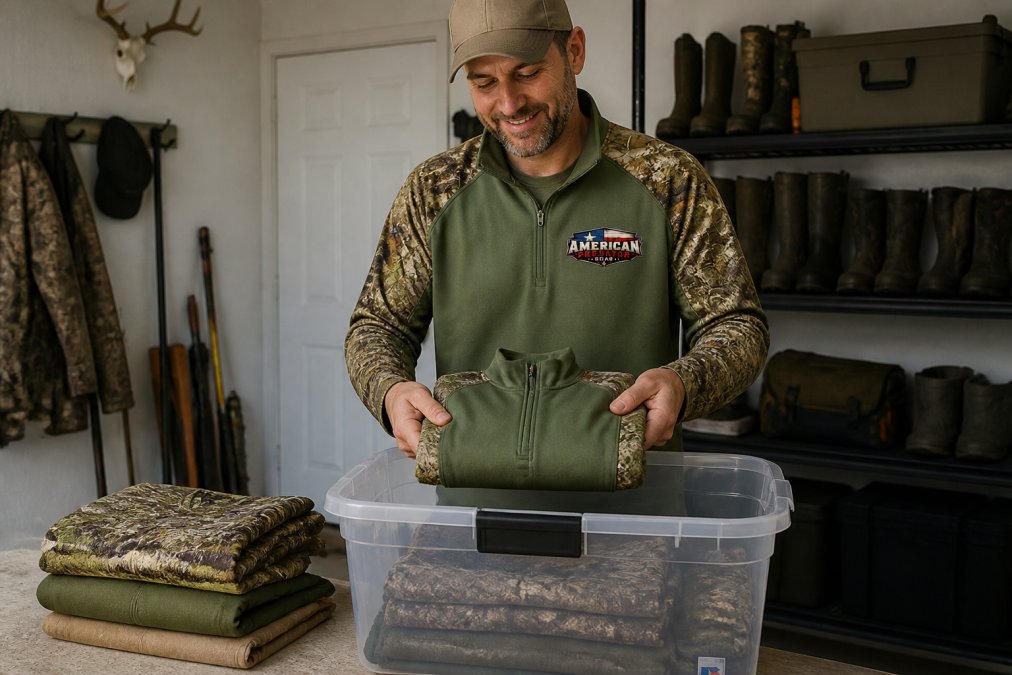
- Wash everything before storage using your scent-free detergent routine.
- Air dry completely before folding or bagging.
- Store in zip-lock bags or airtight containers. Odor-absorbing bags designed for hunting gear block household scents during months of storage.
- Keep gear away from garage chemicals, gasoline, and cleaning products. These scents absorb into synthetic fabrics and are nearly impossible to remove.
- Store in a cool, dark location. UV light degrades synthetic fabrics and fades prints.
| Step | Purpose | Timing |
|---|---|---|
| Wash with scent-free detergent | Remove odor and contamination | Before storage |
| Full air dry | Prevent mildew | Before sealing |
| Seal in airtight bags | Block household scent absorption | During storage |
| Store away from chemicals | Prevent scent contamination | Year-round |
| Check DWR before next season | Restore waterproofing if needed | Before first use |
A common mistake is storing hunting apparel in the same closet as everyday clothes. Fabric absorbs ambient fragrance from detergents and fabric softeners. By opening day, your "clean" hunting jacket smells like your living room.
Frequently Asked Questions
Are you supposed to wash hunting gear?
Yes, washing hunting gear regularly is one of the most important things you can do to stay undetected in the field. Odor builds up fast from sweat, food, and the environment. Washing with a scent-free, fragrance-free detergent after every few uses removes human odor and keeps your hunting apparel performing the way it should. Skipping washes lets scent accumulate in the fabric fibers, which is exactly what you don't want when you're 20 yards from a whitetail.
What laundry detergent is best for hunting clothes?
The best detergent for hunting clothes is scent-free and enzyme-free, with no UV brighteners. Standard detergents leave behind fragrances and optical brighteners that make fabric glow under UV light, the same UV light deer and other game can see. Look for detergents labeled specifically for hunters that are fragrance-free and won't leave residue. Baking soda added to the rinse cycle is a simple, low-cost way to boost odor elimination on base layers and outerwear.
Should I use a dryer for hunting apparel?
Air drying is the safest option for most hunting apparel, especially outerwear with waterproof membranes and DWR coatings. High heat in a dryer can damage synthetic fabrics, degrade moisture-wicking properties, and break down the DWR coating on jackets and bibs. If your care label allows tumble dry low, that setting is generally fine for cotton-poly blends like hoodies and sweatshirts. Always check the gear-specific care labels before machine drying.
Keeping your hunting apparel in top shape takes about 30 minutes of real effort per wash cycle. The payoff is gear that performs, lasts, and doesn't tip off the animal you've been patterning for three weeks. Shop the American Predator Gear collection for hunting apparel built to handle the field, and the wash cycle.
This article was written using GrandRanker