

Table of Contents
- Why Colorado Hunting is a Bucket-List Adventure
- Navigating Big Game Hunting Regulations in Colorado
- How to Get Your Colorado Hunting License and Draw Tags
- Essential High-Altitude Hunting Gear for the Rockies
- Public Land Hunting Tips: Finding Elk and Mule Deer
- Field Care and Post-Harvest Processing at Elevation
- Budgeting for a DIY Colorado Hunting Trip
- Your Colorado Hunting Adventure Awaits
- Frequently Asked Questions
Last Updated: September 5, 2026
Colorado hunting is a bucket-list pursuit for good reason: the state offers some of the most accessible public land and diverse big game opportunities in the country. This guide from American Predator Gear breaks down the regulations, gear, and field strategies you need for a successful 2026 season. Colorado hunting demands preparation, from navigating the draw system to packing for high-altitude terrain. Below, we'll show you exactly how to plan a legal, safe, and memorable trip, whether you're chasing elk or mule deer.
Why Colorado Hunting is a Bucket-List Adventure
The sheer scale of the Rockies is the first thing you notice. Colorado hunting is defined by vast expanses of rugged terrain, where a single game management unit can cover hundreds of square miles. For hunters used to dense Eastern woods, the wide-open alpine basins and dark timber of the West feel like another world. It is a place where the pursuit itself, the glassing, the hiking, and the quiet, becomes as memorable as the harvest.
The challenge is part of the draw. High elevation means thin air, and every ridge you cross demands respect for the altitude. This is a landscape that rewards those who put in the physical work, offering a genuine wilderness experience that few other states can match. It is a true test of skill, patience, and grit.
Navigating Big Game Hunting Regulations in Colorado
Before you pack a single piece of gear, you must master the rules. Big game hunting regulations are not suggestions; they are legal requirements enforced by Colorado Parks and Wildlife. The most critical step is reviewing the current season brochure, which outlines bag limits, legal equipment, and specific season dates for each species and game management unit.
A common mistake is assuming regulations are uniform across the state. They are not. Rules vary dramatically between units, and what is legal in one area may be prohibited in another. You are responsible for knowing the difference. Always consult the official Colorado Parks and Wildlife regulations page before you head out, and check for any emergency closures that can happen due to fire danger or weather.
How to Get Your Colorado Hunting License and Draw Tags
The process starts with a hunting license and, for most big game, a tag obtained through the draw system. You must first purchase a small game license, which is a prerequisite for applying for big game. The application period typically opens in early spring, and getting your application in on time is crucial.

Here is a simplified breakdown of the process:
- Purchase your small game license and a habitat stamp.
- Submit your application for the species and game management unit you want.
- Wait for the draw results, which are typically announced in early summer.
- If you do not draw your first choice, purchase over-the-counter tags for available units, or bank preference points for next year.
For non-resident hunters, the process is more competitive, and preference points are vital for drawing coveted trophy hunting tags. A key insider tip is to apply for less popular units or archery seasons, which often have higher draw odds. This strategy can get you into the field years sooner than waiting for a premium rifle tag.
Essential High-Altitude Hunting Gear for the Rockies
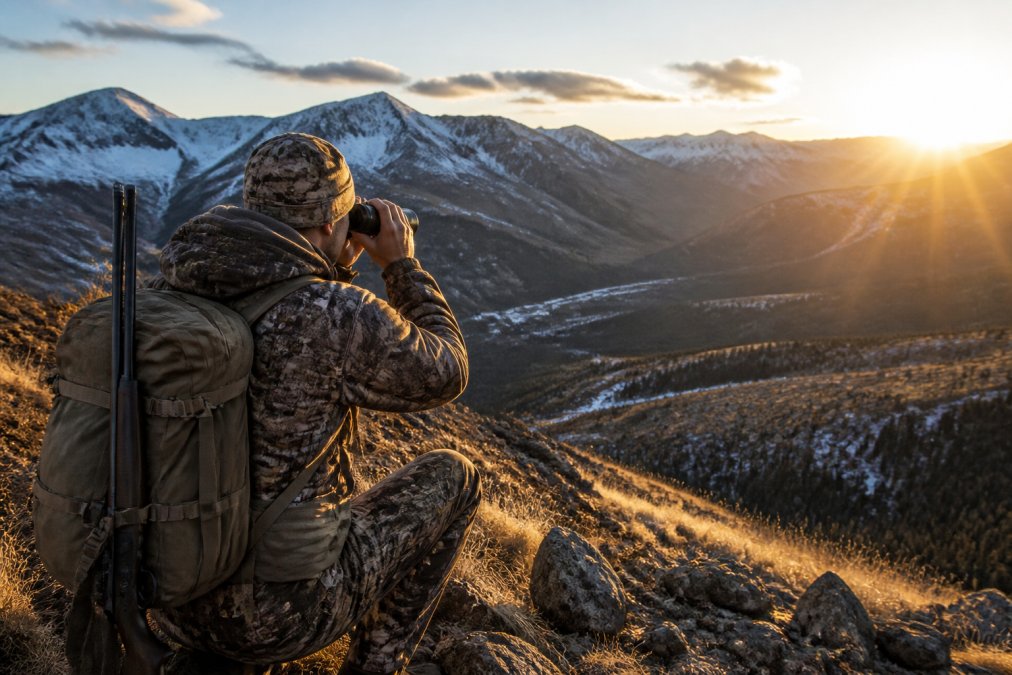
Hunting at 10,000 feet isn't just a gear upgrade, it's a different physical and logistical equation. The air holds roughly 30% less oxygen than at sea level, which means your body works harder, you sweat more, and you dehydrate faster. Your gear must compensate for that reality. The goal isn't just comfort; it's conserving energy for the stalk and the pack-out.
The Elevation-Specific Load-Bearing Strategy
Most flatland hunters overpack. Every extra pound feels like two at altitude. Before you leave, weigh your fully loaded pack on a luggage scale. If it exceeds 50 pounds without food or water, start cutting. Leave the camp chair, the extra knife, and the heavy leather boots at home.
The Layering System, Broken Down by Function
Layering is non-negotiable, but the specific materials matter more than the number of layers. A typical September day on the Western Slope can start at 28°F and hit 70°F by noon, then drop to freezing again by evening. Your system should handle a 40-degree swing without forcing you to stop and change constantly.
- Base Layer: Merino wool or a high-quality synthetic. Avoid cotton entirely, once wet, it stays wet and accelerates hypothermia. Look for a 150-200 weight merino for early season, which balances warmth and breathability.
- Insulating Mid-Layer: A lightweight puffy jacket with 800-fill down or a synthetic equivalent. This is your camp and glassing layer. It should compress to the size of a cantaloupe and weigh under a pound.
- Waterproof Shell: A breathable, packable shell with taped seams. Look for pit zips, critical for dumping heat when you're climbing a ridge. A 3-layer shell is worth the extra cost over a 2-layer for durability against brush.
- Soft-Shell Pants: The workhorse of western hunting. They should be stretchy, quiet, and reinforced at the knees and seat. Cuffed bottoms keep out snow and scree.
Footwear and Socks: The Non-Negotiables
Your boots are the single most important piece of gear. A stiff, full-shank boot with a lugged sole is essential for side-hilling on loose scree and carrying a heavy load of meat. Break them in for at least 50 miles before you arrive. Blisters are not a minor inconvenience at 11,000 feet, they can end a hunt. Pair them with a heavyweight merino sock and carry a spare pair in your pack. Rotate socks at midday to keep your feet dry and prevent hot spots.
The Glassing Kit: Your Eyes at Distance
At elevation, you'll be covering vast basins. A quality 10x42 or 12x50 binocular is your primary tool. If you're hunting with a partner, a spotting scope on a lightweight tripod (under 4 pounds) is worth the weight for judging antler size at 800+ yards. A window-mount or a simple beanbag for your binoculars will stabilize your glass and reduce eye strain during long sessions.
Hydration and Nutrition Systems
Dehydration accelerates altitude sickness. A 3-liter hydration reservoir is the baseline, but you'll also want a way to treat water from streams and seeps. A lightweight filter or purification tablets are essential, don't rely on finding a trailhead spigot. Carry high-calorie, dense snacks: nuts, jerky, and energy bars that won't freeze or crumble. Plan for at least 4,000 calories per day, as your body burns significantly more at altitude.
The Lifestyle Element: Gear That Reflects the Hunt
Your gear is functional, but it also tells a story. The worn patch on your pack, the faded camo pattern, the lucky hat, these are the artifacts of a life spent in the field. After a long day, shedding your sweaty layers and pulling on a comfortable, well-worn shirt that carries a bit of humor or a nod to the brotherhood of hunters is a small ritual. It's a reminder that this pursuit isn't just about the harvest; it's about the life you've chosen. The gear you wear, both in the field and at the campfire, is a badge of that identity.
Public Land Hunting Tips: Finding Elk and Mule Deer
Public land is the heart of Colorado hunting, offering millions of acres of national forest and Bureau of Land Management land. The challenge is that everyone has access to it. To find success, you must be willing to go where others are not. The first rule of public land hunting tips is to hike at least a mile from the nearest trailhead or road. Most hunters won't make that effort.
- Glass, don't walk: Find a high vantage point and spend time scanning for elk and mule deer at first and last light.
- Look for sign: Fresh tracks, droppings, and rubs are your best indicators of animal movement.
- Hunt the transition: Focus on the edges where dark timber meets open meadows, as animals use these zones for feeding and bedding.
- Use maps: Study topographic maps and satellite imagery to find hidden basins and benches that are off the beaten path.
This is where the real work begins. The hunters who are willing to glass from a ridgeline for hours, rather than walking noisily through the forest, are the ones who consistently fill their tags.
Field Care and Post-Harvest Processing at Elevation
The work isn't over when you make a good shot. At high elevation, field dressing and cooling the meat quickly is critical to prevent spoilage. The warm daytime temperatures, even in September, can ruin a harvest in hours if you are not careful. You need a plan for getting the animal quartered and hung or packed out as fast as possible.
A common mistake is waiting until you get back to camp to start processing. You should carry a sharp knife and game bags in your pack at all times. The process involves:
- Field dress the animal immediately to remove internal heat.
- Quarter the animal on the spot to make it packable.
- Place the meat in breathable game bags to allow it to cool and air out.
- Get the meat off the mountain and into a cooler or refrigeration as soon as possible.
This is a labor-intensive process, but it is the only way to ensure you get high-quality game meat on the table. It is a responsibility you owe to the animal and to the tradition of hunting.
Budgeting for a DIY Colorado Hunting Trip
A DIY hunt can be surprisingly affordable, but costs add up fast if you don't plan. Beyond the cost of the license and tag, you have to factor in travel, food, and gear. A realistic budget for a non-resident hunter driving to Colorado for a week-long hunt should account for fuel, lodging or camping fees, and meat processing costs if you don't plan to do it yourself.
Here is a simple framework for planning your finances:
| Expense Category | What to Consider | How to Save |
|---|---|---|
| Licenses & Tags | Non-resident fees are higher | Apply for cheaper species or archery |
| Travel & Lodging | Gas, hotels, or camping | Carpool with a buddy, camp on public land |
| Food & Supplies | 7+ days of meals | Pre-pack dehydrated meals |
| Gear & Clothing | Boots, pack, layers | Buy quality once, don't replace yearly |
| Meat Processing | Butcher fees or DIY | Learn to process your own meat |
The biggest hidden cost is gear. While you don't need the most expensive equipment, you do need items that are reliable. Investing in a quality pair of boots and a solid pack is worth every penny, as these are the items that will make or break your trip.
Your Colorado Hunting Adventure Awaits
A Colorado hunt is more than a checklist of tags, gear, and regulations. It's a pilgrimage into a landscape that demands everything you have and gives back something intangible in return. It's the 4 a.m. wake-up call when the air is so cold it hurts to breathe. It's the long, silent hike in the dark, trusting your headlamp and your instincts. It's the moment you crest a ridge and see a basin full of elk, and your heart pounds so hard you can hear it in your ears.
It's also the other moments, the ones that don't make the highlight reel. The missed shot that haunts you. The empty pack on the hike out. The rain that soaks you to the bone. The frustration of a blown stalk. These are the struggles that every hunter knows. They are the price of admission, and they are what make the successes so sweet.
This is the reality of the life we've chosen. It's a life of mixed emotions, where pride and humility, joy and disappointment, are woven together in every outing. We hunt because we are part of something older and deeper than ourselves. We carry on a tradition that connects us to the land, to the animal, and to each other.
When you're not in the field, you carry that identity with you. It shows up in the stories you tell, the truck you drive, and the shirt on your back. It's a lifestyle that deserves to be celebrated, not just in the moment of success, but every day. It's the humor we share about the one that got away, the pride we feel in our country and our first responders, and the quiet satisfaction of knowing we are living life on our own terms.
So, as you plan your trip, remember why you're going. It's not just to fill a tag. It's to test yourself. To reconnect with what matters. To stand in a place that makes you feel small and significant at the same time. To be happy that it's you and the great outdoors.
Get out there. Support the outdoor lifestyle. Love every minute of it, the good, the bad, and the unforgettable. And when you're back home, wear your stories proudly. Let the world know that you are a hunter, and that this life is one you chose with your whole heart.
Frequently Asked Questions
Is Colorado a good state for hunting big game?
Colorado is a premier destination for big game hunting. It boasts the largest elk population in the world and a thriving mule deer herd. Hunters are drawn to the state's vast public lands, which offer abundant opportunities for both over-the-counter tags and limited draw hunts. The high-altitude terrain provides a challenging and rewarding experience for those seeking a true wilderness adventure.
What are the primary regulations for non-resident hunters in Colorado?
Non-resident hunters must follow all Colorado hunting regulations, including completing a hunter education course if born after January 1, 1949. You'll need to apply for licenses through the draw system for most big game species. A habitat stamp is also required. It's critical to review the current season dates and bag limits in the official regulations brochure before your trip.
What is the best high-altitude hunting gear for elk?
Hunting elk in Colorado demands layers. Start with a moisture-wicking base layer, add an insulating mid-layer, and top it with a durable, quiet outer shell. Quality boots with good ankle support are non-negotiable for rugged terrain. A reliable backpack for hauling meat and a good pair of binoculars are also essentials for a successful high-altitude hunt.
How do I find public land to hunt in Colorado?
The best tool for finding public land is the Colorado Parks and Wildlife interactive map, along with resources like the U.S. Forest Service and Bureau of Land Management maps. Look for Game Management Units (GMUs) with high elk or deer populations. Always verify land ownership before you go to avoid trespassing on private property.
This article was written using GrandRanker