

Table of Contents
- Why Limited Edition Hunting Apparel Is Worth the Hunt
- Best Camo Patterns for Predator Hunting by Terrain
- Benefits of High-Performance Hunting Fabrics
- Unique Hunting Lifestyle Shirts That Tell Your Story
- What to Look for When You Buy Hunting Apparel Online
- How to Care for Technical Fabrics and Keep Them Field-Ready
- Conclusion: Claim Your Spot in the Woods
- Frequently Asked Questions
Last Updated: September 4, 2026
Limited edition hunting apparel has become the modern hunter's badge of honor, blending technical performance with the stories and tag lines that define our way of life. In this guide from American Predator Gear, we break down how to buy limited edition hunting apparel online without getting burned, what fabrics actually matter, and why the best pieces sell out before you hit the woods.

Why Limited Edition Hunting Apparel Is Worth the Hunt
Limited edition hunting apparel combines the functional demands of the outdoors with a sense of identity that standard catalog gear cannot match. A limited drop gives you concealment that works and a design that speaks to your specific obsession, whether that is calling coyotes or chasing hogs through thick brush.
The real value is in the scarcity. When a design is released for a limited time and then retired, it becomes a marker of the season you were there, a trophy you can wear. Grabbing a piece when it drops creates a connection to the hunt that lasts long after the season closes and often becomes a conversation starter at camp.
Best Camo Patterns for Predator Hunting by Terrain
Choosing the right camo pattern for predator hunting is less about brand loyalty and more about matching the dominant colors, values, and textures of your specific hunting ground. Understand how camo works at the distances predators are typically called, often inside 100 yards, where the eye reads large shapes and value contrast before fine detail.
The Science of Value and Contrast
Camo patterns fail when their dark-to-light contrast is too high for the environment. In open sage and grass country, the sun washes out color, so a pattern heavy on tans, light browns, and muted greens with low contrast breaks up your outline. In thick timber and dark bottomlands, deep browns, blacks, and charcoal tones with higher contrast keep you invisible in dappled shadows. A pattern that works on a Kansas wheat field will glow like a beacon in a Georgia swamp because the value scale is wrong.
Matching Patterns to Specific Biomes
Here is a practical breakdown by the environments most predator hunters work, with the visual characteristics to look for rather than specific brand names, since limited edition drops often use proprietary patterns:
| Terrain Type | Dominant Colors | Pattern Traits to Look For | What to Avoid |
|---|---|---|---|
| Open prairie / sage | Tans, dusty greens, light browns | Large, soft-edged shapes; low contrast; muted earth tones | Dark, high-contrast timber patterns |
| Hardwood timber | Browns, blacks, charcoal | Medium-to-large shapes with sharp edges; deep shadow tones | Light, washed-out field patterns |
| Marsh / waterfowl edge | Reeds, cattail browns, olive | Vertical line elements; elongated shapes that mimic stalks | Round, leafy woodland shapes |
| Rocky mountain / scree | Grays, tans, slate | Angular, jagged shapes; neutral gray-brown blends | Green-heavy bottomland patterns |
| Agricultural fields | Stubble gold, dirt brown | Fine, repetitive texture; low-contrast neutral tones | Large, high-contrast blobs |
The 10-Yard Rule
A useful field test is the 10-yard rule. Hold your arm out and look at the pattern on your sleeve. If the shapes blur together at that distance, the pattern will turn into a solid block of color at 50 yards. If the shapes are too large, they will read as unnatural dark spots. The best predator patterns use macro shapes for long-range breakup and micro textures for close-range concealment.
Terrain-Specific Layering of Patterns
Your camo pattern should change with the season, not just the location. Early-season hunting means green foliage, so a pattern with more olive and green tones works; by late winter, the same ground shifts to grays and browns. If you hunt multiple regions, build your collection around two complementary patterns, one for open country and one for timber, rather than chasing every new drop.
The Bottom Line on Pattern Selection
There is no single "best" camo pattern because the terrain dictates the answer. Hunters who consistently fill tags match their pattern to the macro environment, pay attention to value contrast, and understand that movement and silhouette matter more than any fabric print.
Benefits of High-Performance Hunting Fabrics
High-performance hunting fabrics are the difference between a comfortable, focused day in the field and a miserable one spent fighting your own clothes. The real benefit is not any single fabric, it is how those fabrics work together in a layering system. Understanding the three-layer system is the single most important upgrade you can make to your hunting wardrobe.
The Three-Layer System Explained
A proper layering system has three distinct jobs, and each layer must be made from fabrics that perform that job without fighting the other layers:
| Layer | Primary Job | Best Fabrics | What to Avoid |
|---|---|---|---|
| Base layer | Moisture management | Merino wool, polypropylene, silk-weight synthetics | Cotton (holds sweat, causes chills) |
| Mid layer | Insulation | Fleece, down, synthetic loft (Primaloft, Thinsulate) | Thick cotton hoodies (heavy, slow-drying) |
| Outer layer | Weather protection | Waterproof breathable membranes (Gore-Tex, eVent), ripstop nylon | Non-breathable rubber or PVC |
Why the Base Layer Matters Most
The base layer's job is not to keep you warm, it is to move sweat away from your skin before it cools and makes you freeze. Merino wool is the gold standard because it wicks moisture, resists odor, and insulates even when damp. Synthetic base layers dry faster and are more durable, but they hold odor more readily. Cotton is the worst possible base layer: it absorbs sweat, loses all insulating value when wet, and takes hours to dry.
The Mid Layer: Trapping Heat Without Bulk
The mid layer works by trapping dead air space between the fibers. Fleece is lightweight and breathable but offers little wind resistance. Down provides the best warmth-to-weight ratio but loses all insulating value when wet. Synthetic loft materials like Primaloft and Thinsulate mimic down's warmth while continuing to insulate when wet, making them the better choice for early-season hunts. Match mid layer weight to the temperature range: a lightweight grid fleece for 40-60 degree days, a mid-weight fleece for 20-40 degrees, and a heavy synthetic loft for below 20 degrees.
The Outer Layer: Protection That Breathes
The outer layer is about stopping wind, rain, and snow while letting moisture escape. Waterproof breathable membranes allow sweat vapor to pass through while blocking liquid water from outside. The trade-off is that no membrane is perfectly breathable; the more waterproof a fabric is, the less breathable it tends to be. For stationary hunts in a blind, a heavier waterproof shell is fine; for active hunts, look for a shell with pit zips or venting options.

The Quiet Factor and Fabric Mechanics
Beyond layering, specific fabric constructions matter for predator hunting. Ripstop polyester uses a reinforcing grid pattern that stops tears from spreading, which is critical when pushing through thick brush. Brushed fleece has a napped surface that absorbs sound rather than reflecting it, making it significantly quieter than smooth nylon. Articulated fit, pre-shaped elbows, shoulders, and knees, reduces fabric binding when you draw your bow or shoulder your rifle.
How to Evaluate a Layering System Before You Buy
When you buy limited edition hunting apparel online, you cannot feel the fabric, so read the specs carefully. Look for the fabric weight (measured in grams per square meter, or gsm), the fiber content, and any treatment claims like DWR (durable water repellent). A 150-200 gsm merino base layer is ideal for most hunting; a 300+ gsm fleece mid layer works for cold sits. Check whether the outer layer has a membrane or just a coating, membranes last longer and breathe better.
The Payoff of a Proper System
The benefit of high-performance fabrics is not just comfort, it is the ability to stay in the field longer, move more quietly, and remain effective when the weather turns. A hunter who is dry, warm, and comfortable makes better decisions and is less likely to pack it in early.
Unique Hunting Lifestyle Shirts That Tell Your Story
Unique hunting lifestyle shirts are where the culture of the sport really lives, capturing the humor and reality of long sits, missed shots, and the thrill of the chase. This is the apparel that shows the life of fun in hunting, with designs that make you laugh when you are covered in mud or sitting in a tree stand. A shirt that speaks to the struggle and reality of the field connects you to the broader community of hunters who share those mixed emotions.
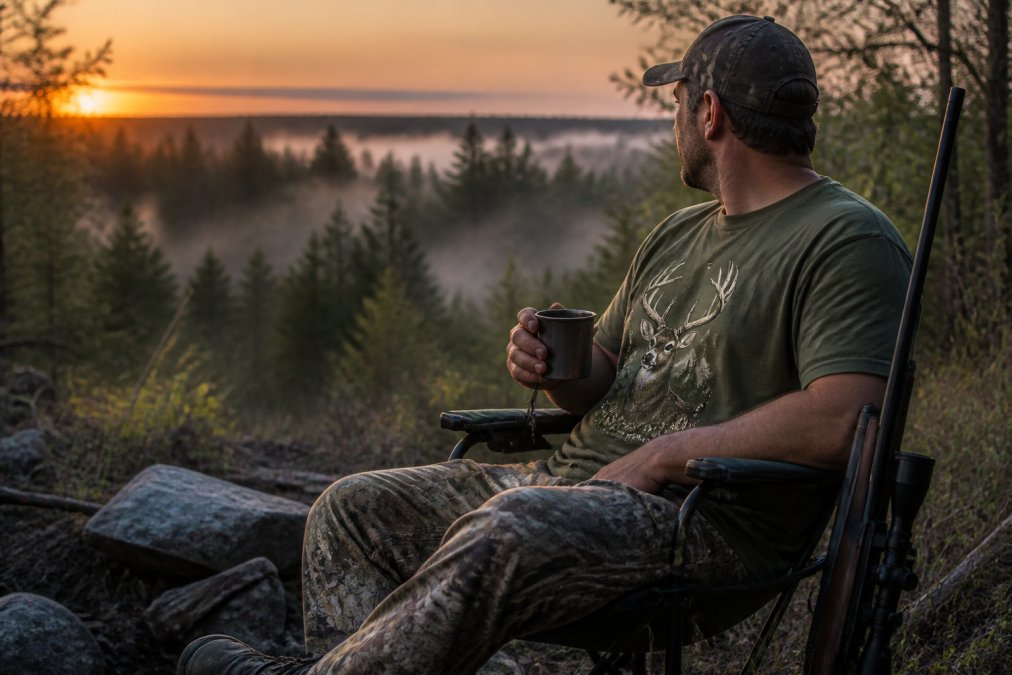
Look for designs that speak to specific styles, whether that is a hog hunting graphic, a coyote calling joke, or a patriotic nod to the outdoor lifestyle. The best shirts use high stitch density for a smoother printing surface, so the artwork holds up through dozens of washes and tough days in the brush. A shirt that tells your story becomes a way to identify fellow sportsmen and support the traditions you love every time you wear it.
What to Look for When You Buy Hunting Apparel Online
When you buy hunting apparel online, look past the photos and focus on the construction details that determine whether the gear survives a season. Start with the seams. Double-needle sleeves and bottom hems resist unraveling, while taped necks and shoulders add durability where shirts take the most stress. A seamless collar or tag-free label also prevents chafing during a long day of glassing.
Fit is another major consideration. A modern classic fit gives you room to layer without feeling bulky, which is essential for bowhunters who need a full range of motion for the draw. Pay attention to the fiber content, too. A 100% preshrunk ringspun cotton jersey is soft and breathable for warm weather, but a cotton and polyester fleece blend adds warmth and dries faster when caught in a surprise shower. If you are a woman looking for gear, seek out pieces cut for a woman's frame rather than sizing up in men's styles, which often restricts movement in the shoulders and hips.
How to Care for Technical Fabrics and Keep Them Field-Ready
Caring for technical fabrics properly is what separates gear that lasts a decade from gear that falls apart after a single season. Wash your hunting apparel with scent-free detergents and avoid fabric softeners, which coat the fibers and ruin moisture-wicking performance. Air drying is almost always better than a machine dryer, as high heat breaks down elastic fibers and can shrink cotton blends.
For your camo and graphic shirts, turn them inside out before washing to protect the print from friction and fading. When storing gear between seasons, keep it in a cool, dry place away from direct sunlight, which degrades technical fabrics over time. A common mistake is leaving hunting clothes crumpled in the truck cab all summer; that heat and UV exposure does more damage than a full season of wear in the field.
Conclusion: Claim Your Spot in the Woods
Getting the right gear is a challenge, especially when you need limited edition hunting apparel that actually performs in the field and reflects the hunting lifestyle you live. American Predator Gear solves this with signature clothing lines designed by hunters, for hunters, capturing the grit, humor, and patriotic spirit of the outdoors. With exclusive new designs unveiled every month and limited-time special releases like the Sounder Pounder, Smokin Yotes, and Trash Panda collections, you get access to unique, high-performance apparel that honors the tradition and hard work of the hunting community. Get started with American Predator Gear and claim your spot in the woods before the next drop sells out.
Frequently Asked Questions
What makes hunting apparel limited edition?
Limited edition hunting apparel is produced in small batches for a short window, often a single month. Once that window closes, the design is retired and not restocked. This approach keeps each drop exclusive and lets brands take creative risks with humor, patriotic themes, or species-specific artwork. For collectors, it means the shirt you wear in the field won't be on everyone else's back next season. If you see a design you like, grab it before the month ends.
Are limited edition hunting shirts better for field performance?
Not automatically. Limited edition refers to availability, not construction. A shirt's field performance depends on the fabric and build, not the print run. Look for moisture-wicking polyester in warm weather or cotton-poly fleece blends for cold mornings. The best approach is to check the material specs first and treat the exclusive design as a bonus. A shirt with a modern classic fit and high stitch density can outlast a premium-priced option with weaker seams.
How do I choose the best camo pattern for predator hunting?
Match the pattern to your terrain. For open fields and agricultural land, a pattern with light browns and tans breaks up your outline against dried crops. In dense timber or brush, a pattern with darker greens and blacks provides better concealment. When in doubt, pick the pattern that mirrors your primary hunting area's dominant colors.
Where can I find unique hunting apparel that reflects my lifestyle?
American Predator Gear releases new designs each month, with themes ranging from predator hunting humor to patriotic and first responder tributes. Collections like Sounder Pounder, Smokin Yotes, and Trash Panda speak directly to the hunters who live for the field. The Camo Long Sleeve retails for $49.99, while graphic tees like Yotes in Texas and Deer Feeder are $28.99. New drops are announced monthly, so checking the site at the start of each month helps you catch designs before they retire.
This article was written using GrandRanker