

Table of Contents
- Why Proper Fit Matters for Women Hunters
- Understanding Women's Hunting Gear Proper Fit Fundamentals
- How to Layer Hunting Clothes for Women
- Women's Hunting Clothing Sizing Chart and Measurements
- Women's Hunting Boots Fit Guide
- Essential Hunting Apparel Checklist for Women
- Transitioning from Casual Gear to Technical Hunting Apparel
- Field Maintenance and Gear Repair for Longevity
Last Updated: August 30, 2026
Why Proper Fit Matters for Women Hunters
A jacket that pulls across the shoulders, bibs that gap at the waist, or boots that blister your heels will end your season before it starts. Most hunting apparel was designed for men's bodies, then shrunk down. Women's torsos are proportionally longer, shoulders narrower, hips wider, and leg angles different. When gear doesn't account for these differences, you're fighting your equipment instead of focusing on the hunt.
Proper fit means your layers work as a system, your movement stays silent and unrestricted, and you can stay in the field longer without pain or distraction.
Understanding Women's Hunting Gear Proper Fit Fundamentals
Anatomy of a proper fit for women
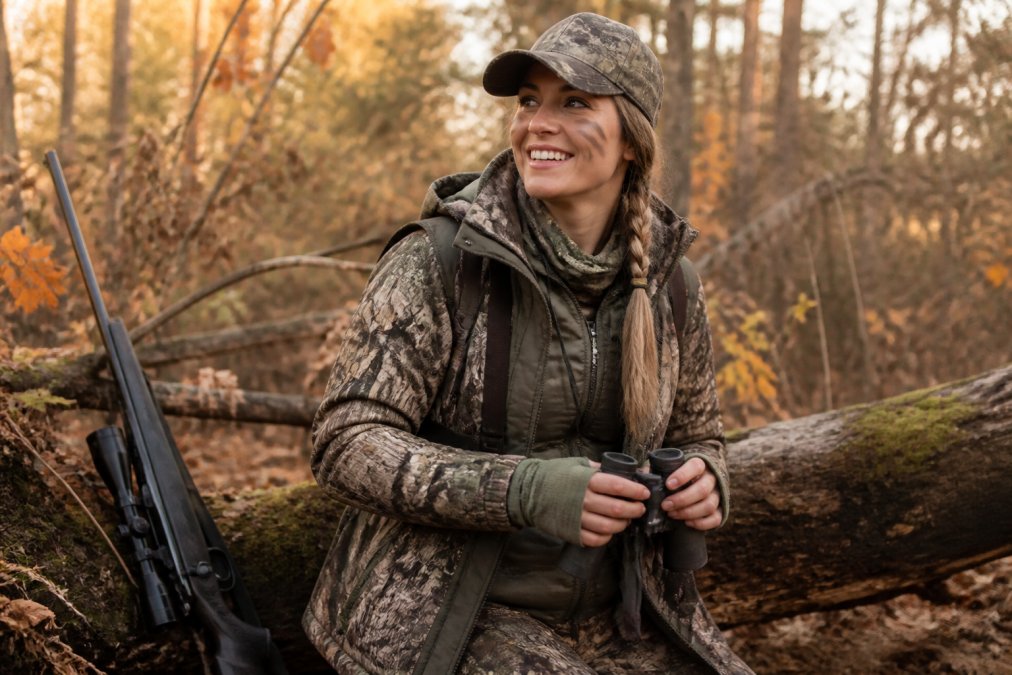
Your base layer should feel snug but not restrictive, moving moisture away from your skin without binding at the shoulders or armpits. When you raise your arms to draw a bow or rifle, there should be no pulling sensation across the back or chest.

Your mid-layer should drape naturally without excess fabric bunching at the waist. Sleeves should reach your wrist bone when your arms hang at your sides. Your outer shell needs to fit over your mid-layer without compressing it, which destroys insulation.
For women specifically, pay attention to torso length. Many women's hunting jackets are cut too short, leaving gaps at the lower back when you bend forward or sit in a tree stand. The jacket should extend at least two inches past your hip bone. Sleeves that are too short expose your wrist in shooting position; sleeves that are too long bunch at your hands and create noise.
Articulated knees in bibs and pants are critical. Look for gusseted crotch construction that allows full range of motion when climbing into a stand or walking through brush. The waistband should sit at your natural waist and have adjustability so it stays put without cutting off circulation.
Gender-specific tailoring vs. unisex sizing
Unisex sizing assumes a straight body from shoulders to hips with minimal taper. Women-specific gear is cut with narrower shoulders, a longer torso relative to arm length, and shaping through the waist and hips. This means your base layers sit flush against your skin, your mid-layers move with you, and your outer shell doesn't create noise or restrict movement.
How to Layer Hunting Clothes for Women
Layering is the foundation of staying warm, dry, and comfortable in the field.
Base layer selection and fit
Your base layer pulls sweat away from your skin so you stay dry, which keeps you warm. The best base layers for hunting are moisture-wicking synthetics or merino wool; cotton holds moisture and makes you cold.
Fit your base layer snug but not tight. When you raise your arms overhead, the base layer should move with you without pulling at the shoulders or riding up at the waist. For women specifically, look for base layers with a tapered waist and shaped side seams. The sleeves should reach your wrist bone, and the torso should extend past your hip bone.
Synthetic base layers dry faster and perform better when wet. Merino wool is warmer and naturally antimicrobial. Choose based on your climate and how long you'll be in the field between washing.
Mid-layer and outer shell layering
Your mid-layer creates insulation through synthetic insulation, down, or fleece. It should fit loosely enough to trap dead air, but not so loose that it creates bulk or noise.

For women, mid-layer fit matters because bulk creates problems in a tree stand or blind. Look for mid-layers with articulated construction and shaped sleeves that move with your body.
Your outer shell is your waterproof, windproof barrier. It should fit over your mid-layer without compressing it. For women hunters, outer shells should have a longer torso than typical jackets. When sitting in a tree stand, your torso is compressed, and a shell that's too short will ride up and expose your back. The shell should also have a shaped waist and narrower shoulders than men's gear. All seams should be sealed so water doesn't seep through stitching.
Look for outer shells with pack belt compatibility and silent fabric. Test this by rubbing the fabric against itself.
Women's Hunting Clothing Sizing Chart and Measurements
Getting accurate measurements is the only way to find gear that actually fits. Don't rely on size charts alone; every brand cuts differently.
Taking accurate measurements for bibs and jackets
Start with a soft measuring tape and wear the base layer you'll hunt in. Measurements should be snug but not tight.
Chest: Measure around the fullest part of your chest, keeping the tape parallel to the ground.
Waist: Measure at your natural waist, the smallest part of your torso, usually about an inch above your belly button.
Hips: Measure around the fullest part of your hips.
Torso length: Sit upright and measure from the base of your neck down your spine to your hip bone. Women typically have longer torsos relative to arm length than men, and this measurement is often where sizing goes wrong with unisex gear.
Sleeve length: Extend your arm to the side at shoulder height. Measure from the center of your back neck, across your shoulder, down your arm to your wrist bone.
Inseam: Wear the boots you'll hunt in. Measure from your crotch down the inside of your leg to the top of your boot.
Write these measurements down and compare them to the brand's size chart before ordering. If you're between sizes, prioritize the fit that matters most for your hunting style.
Body type specific sizing considerations
Women come in different body types, and gear fits differently depending on your shape.
Pear-shaped bodies have narrower shoulders and fuller hips. You need jackets that fit your shoulders without excess fabric, and bibs with enough hip room without a baggy waist. Look for gear with shaped side seams and adjustable waistbands.
Apple-shaped bodies carry weight in the torso and have slimmer legs. You need jackets and bibs with enough room through the midsection without excess fabric at the hips. Adjustable waistbands are critical.
Hourglass-shaped bodies have defined waists with full busts and hips. You need gear with darted tailoring and shaped construction through the waist.
Athletic or rectangular bodies have similar shoulder and hip width with minimal waist definition. You can often wear less-shaped gear, but you still need torso length that accounts for women's proportions.
When shopping, look at the brand's design philosophy. Do they mention women-specific tailoring? Do their size charts account for torso length separately from arm length? These are signals that they understand women's fit.
Women's Hunting Boots Fit Guide
Your boots are the foundation of your comfort in the field. Blisters, cold feet, or boots that shift in the stand will end your hunt faster than anything else. Women's feet are shaped differently than men's, and women-specific boots account for that.
Boot fit essentials and blister prevention
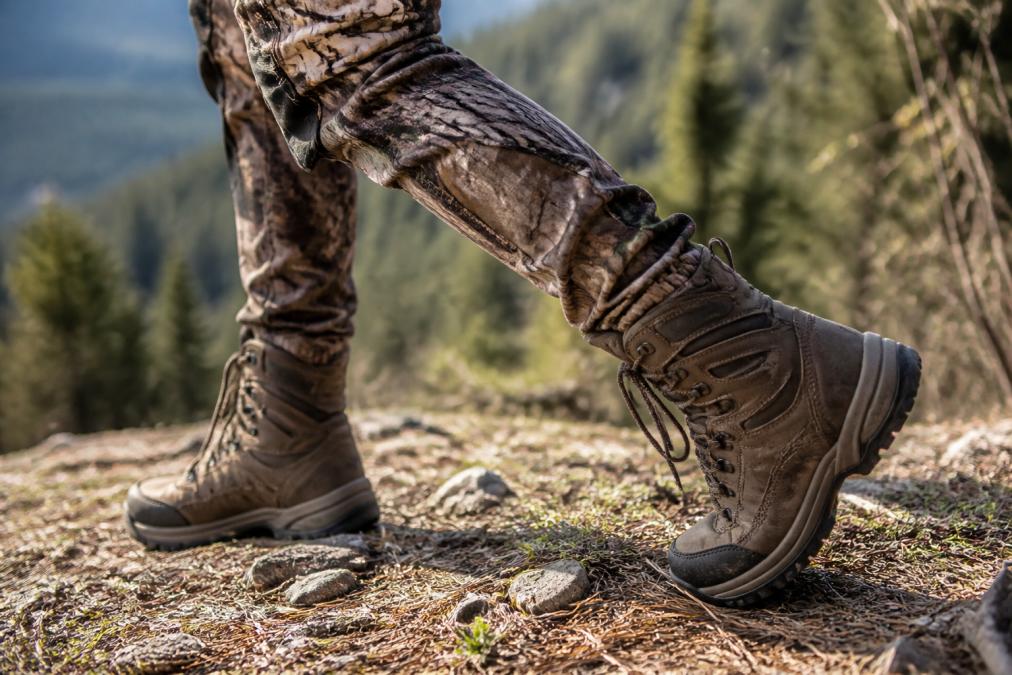
Your heel should sit snugly in the boot without slipping when you walk. If your heel lifts more than a quarter-inch, the boot is too loose. The midfoot should be snug but not tight. You should be able to fit one finger between the top of the boot and your ankle. The toe box should have enough room that your toes don't touch the front of the boot, but not so much room that your foot slides forward. When wearing your hunting socks, your toes should be about a thumb's width from the boot's end.

Women-specific boots have narrower heel cups and a more tapered ankle than men's boots. This prevents heel slippage that happens when you wear men's boots sized down. The arch support is also shaped for women's foot anatomy, reducing fatigue and blister risk.
Break in your boots before the season. Wear them around your house, then on short walks, then on longer hikes. This lets the material conform to your foot.
Blister prevention starts with the right socks. Merino wool or synthetic blend hunting socks wick moisture and provide cushioning. Cotton socks hold moisture and cause blisters. Wear two pairs of socks, a thin liner sock under a thicker outer sock, to reduce friction. If you feel a hot spot forming, apply blister prevention tape or moleskin immediately.
Essential Hunting Apparel Checklist for Women
Building a complete hunting wardrobe means understanding what each piece does and how it fits into your system.
Weatherproofing and fabric technology
Your outer shell needs to be truly waterproof, not just water-resistant. Waterproof membranes like Gore-Tex keep water out while allowing sweat vapor to escape.
Durable water repellent (DWR) coating on the outside of your outer shell helps water bead up and roll off. DWR wears off over time and can be reapplied to extend gear life.
Breathability is critical. If your outer shell doesn't breathe, sweat accumulates inside, making you cold and wet. Look for membranes that balance waterproofing with breathability.
Windproof construction is essential for hunting. Wind strips away your body heat rapidly. Your outer shell should have wind-blocking panels in high-exposure areas like the chest and back. Gusseted underarms also prevent wind from leaking in.
Silent fabric is non-negotiable for hunting. Some waterproof fabrics crinkle loudly when you move. Test this before buying by rubbing the fabric against itself.
Blaze orange and safety requirements
Blaze orange (also called hunter orange) is legally required in most hunting seasons. Check your local regulations for specific requirements, but generally you need a blaze orange hat, vest, or both visible from 360 degrees.
Blaze orange doesn't interfere with your concealment for game. Animals don't see orange the way humans do. Blaze orange is visible to other hunters from long distances, which keeps you safe.
Look for blaze orange that integrates into your hunting system. A blaze orange hat works if you'll be stationary. A blaze orange vest works over your outer shell. The key is that blaze orange is visible from all angles, especially from above if you're in a tree stand.
Durability and material performance
Hunting gear gets abused. You're crawling through brush, climbing into stands, and sitting in wet conditions. Your gear needs to survive this without falling apart.
Look for reinforced areas where wear happens most: knees, elbows, and seat. Double-layer or triple-layer construction in these areas extends gear life significantly. Articulated knees in bibs should have reinforced panels.
Seam construction matters. Flat-felled seams are stronger than simple seams. All seams in your outer shell should be sealed to prevent water from seeping through stitching.
Zipper quality affects durability. YKK zippers are the industry standard for hunting gear. Cheap zippers fail in cold weather or after repeated use.
Material choice affects durability and performance. Synthetic materials are generally more durable than natural materials and perform better when wet. Merino wool is durable and naturally antimicrobial. Down is warm but fails when wet. Choose materials based on your climate and hunting conditions.
Transitioning from Casual Gear to Technical Hunting Apparel
If you're coming from wearing casual outdoor gear, technical hunting apparel will feel different. It's tighter, more structured, and designed for specific movements.
Technical hunting gear is fitted to eliminate excess fabric that creates noise or restricts movement. Your first technical hunting jacket might feel snug compared to what you're used to. That's correct. Technical gear often uses synthetic or wool because they perform when wet. The weight difference is significant, technical hunting gear is engineered to be lightweight while providing maximum insulation and protection.
Field Maintenance and Gear Repair for Longevity
Your hunting gear will last longer if you maintain it properly. Field repairs keep you functional during the season, and off-season maintenance extends gear life.
In-field repairs: Carry a small repair kit with duct tape, a sewing needle, thread, and patches. If a seam starts to fail, you can stitch it in the field. If your outer shell tears, duct tape creates a temporary waterproof seal.
Cleaning: Wash your gear regularly during the season, especially after wet hunts. Use a gentle detergent and cold water. Avoid fabric softener, which reduces water repellency. Hang-dry your gear; don't use a dryer, which damages waterproof membranes.
DWR reapplication: As your gear ages, the water-repellent coating wears off. You can reapply DWR treatment using spray-on products or wash-in treatments.
Storage: Store your gear in a cool, dry place during the off-season. Don't store it in plastic bags, which trap moisture. Use breathable storage bags or hang your gear in a closet. Make sure gear is completely dry before storage to prevent mildew.
Inspection: Before each season, inspect your gear for damage. Check seams for separation, zippers for smooth operation, and fabric for tears or thin spots. Address small problems before they become big ones.
Finding women's hunting gear with proper fit is the single most important investment you can make in your hunting experience. Gear that fits your body, not a scaled-down men's body, lets you focus on the hunt instead of fighting your equipment. When you're building your hunting wardrobe, prioritize fit first, then performance. Your body will thank you when you're sitting in a tree stand at dawn, warm and comfortable, ready for what the day brings. Support the outdoor lifestyle, love hunting every time. Be happy it is you and the great outdoors!!
Frequently Asked Questions
Should you size up in women's hunting clothes?
No. Properly fitted women's hunting gear should fit your actual measurements without sizing up. Women's hunting apparel is cut with darted tailoring and gusseted construction specifically for female physiques. Sizing up creates excess fabric that restricts movement, reduces thermal regulation, and increases noise in the field. Measure your chest, waist, hips, and inseam accurately, then match those measurements to the sizing chart provided by the manufacturer.
How should hunting base layers fit for maximum performance?
Base layers should fit snug against your skin without bunching or restricting movement. Moisture-wicking base layers work by pulling sweat away from your body; loose layers can't do this effectively. Look for tapered fits through the torso and articulated sleeves that allow full shoulder mobility. The layer should move with your body during draw cycles and climbing. Avoid cotton entirely, choose synthetic or merino wool options that maintain thermal regulation when damp.
What are the key differences between men's and women's hunting apparel cuts?
Women's hunting gear features darted tailoring at the bust and waist, a higher armhole for proper shoulder alignment, and a tapered fit through the torso. Men's gear has a straight cut from chest to waist. Women's bibs include a higher rise in the back and articulated knees positioned for female leg geometry. Women's jackets have shorter torso lengths and narrower shoulder spans. These differences ensure proper fit, thermal regulation, and freedom of movement specific to female physiology without requiring sizing up three sizes.
How do I measure myself accurately for hunting bibs and jackets?
Wear the base layers you plan to hunt in, then measure: chest (around fullest part), natural waist, hips (around fullest part), and inseam (from crotch to heel). For bibs, measure your torso length from shoulder to hip. For jackets, measure from the base of your neck to your hip. Use a soft measuring tape and keep it parallel to the ground. Record measurements in inches and compare to the manufacturer's sizing chart. If you're between sizes, choose based on your largest measurement to avoid restriction.
How should hunting boots fit to prevent blisters during long treks?
Hunting boots should have a thumb's width of space between your longest toe and the boot's end. Your heel should not slip when walking downhill. Wear the socks you'll hunt in when trying boots on. The boot should feel snug around your midfoot and ankle without pinching. Break boots in gradually before season with short hikes. Women-specific boots have narrower heel cups and a tapered toe box designed for female foot anatomy. Proper fit prevents the movement that causes blisters during long days in the field.
Why is blaze orange required, and how does it affect women's hunting gear fit?
Federal and state hunting regulations require blaze orange for safety, it makes you visible to other hunters while remaining invisible to game. Quality women's hunting gear integrates blaze orange panels into the design without compromising fit or function. Look for vests or jackets with strategically placed blaze orange that don't restrict arm movement or interfere with pack belt compatibility. The orange should be visible from multiple angles. Proper fit means the blaze orange stays in place during movement and doesn't add bulk that disrupts your layering system.
What fabric technologies should I look for in women's hunting gear?
Prioritize durable water repellent (DWR) coatings, waterproof membranes, and breathability for moisture management. Synthetic insulation or merino wool provides thermal regulation when wet. Look for windproof outer shells that reduce noise during movement. Seam sealing prevents water from entering at stress points. Articulated construction with gusseted crotch and knee areas improves durability in high-wear zones. Silent fabrics are essential for hunting, avoid materials that rustle. These technologies work together to keep you warm, dry, and concealed without restricting the mobility you need in the field.
This article was written using GrandRanker