

Table of Contents
- Why Hunting Apparel Matters for Different Game Styles
- Best Layering System for Hunting Success
- Camo Patterns for Different Terrains and Seasons
- How to Wash Hunting Gear to Extend Its Life
Last Updated: August 28, 2026
Why Hunting Apparel Matters for Different Game Styles
The wrong gear can ruin a hunt before you step into the field. A bowhunter needs silent, non-restrictive layers. A glasser scanning high-altitude terrain needs breathability and thermal regulation. A treestand hunter needs something entirely different from someone stalking through thick brush. Your clothing either works with your hunting method or against it, the difference between success and failure often comes down to how well your apparel matches your specific hunting style.
Best Layering System for Hunting Success
A proper layering system is the foundation of hunting apparel for specific game styles. The system works through three zones: base layer, mid-layer, and outer shell.
Your base layer handles moisture-wicking, pulling sweat away from your body so you stay dry. A damp hunter is a cold hunter, and cold hunters make mistakes (the CDC). The mid-layer traps warm air and provides insulation, adjust this for temperature without overheating during the hike in. Your outer shell protects against wind and moisture while maintaining breathability so you don't sweat inside your jacket.
The real secret is matching your layers to your hunting style. A bowhunter needs articulated fit and silent fabric that won't rustle during the draw. Someone glassing from a ridge can afford bulkier insulation because movement is minimal. A stalker needs balanced mobility and warmth without excess bulk.
Camo Patterns for Different Terrains and Seasons
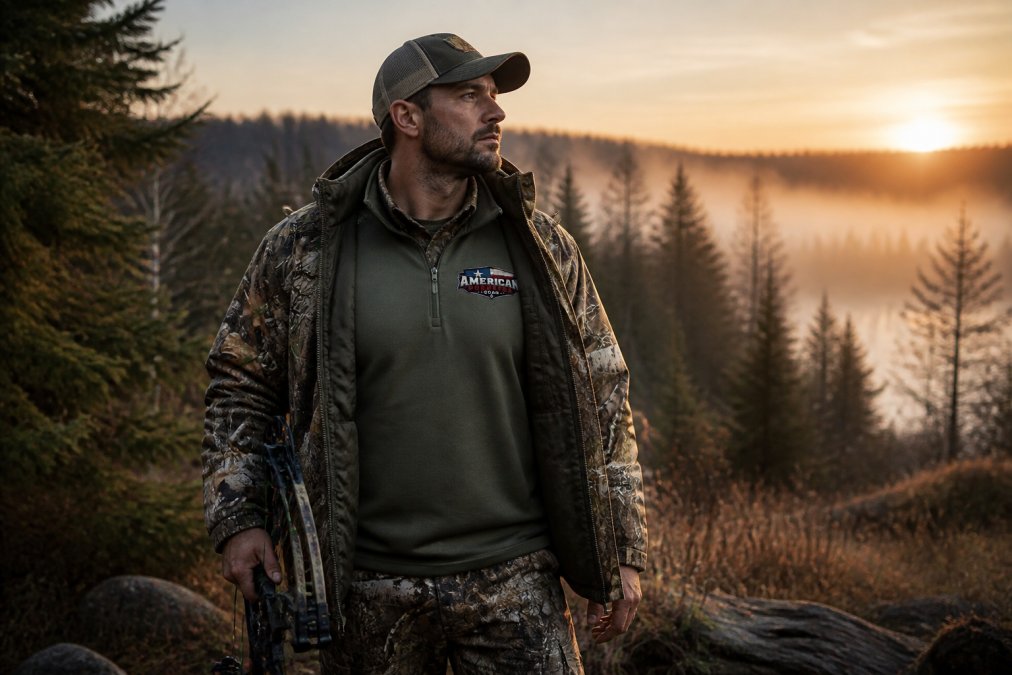
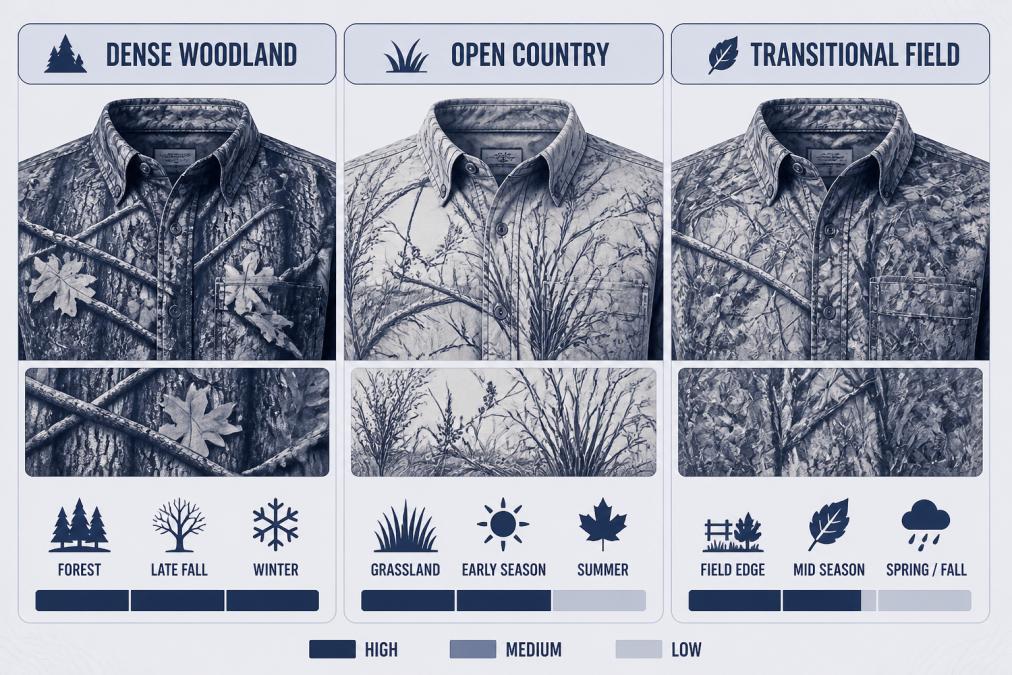
Concealment through camouflage patterns is non-negotiable for hunting apparel for specific game styles. Different terrains demand different patterns because what breaks up your outline in a hardwood forest will make you stand out in open country.
Woodland patterns work best in dense timber with mixed vegetation. Open country patterns use lighter tones for glassing terrain and high-altitude hunts. Field patterns bridge the gap, working reasonably well in transitional terrain like brush-filled draws and field edges. Season matters as much as terrain, winter demands different colors than fall, and spring vegetation requires different concealment than summer.
How to Wash Hunting Gear to Extend Its Life
Proper maintenance transforms good hunting apparel into gear that lasts for years. Hand wash in cold water with specialized hunting gear detergent, regular laundry soap breaks down technical fabrics (the FTC). Avoid fabric softener; it destroys moisture-wicking function (peer-reviewed research).
For durable water repellent coatings, apply DWR treatment when water-beading fades. Air dry whenever possible; high heat destroys synthetic fibers and waterproof membranes. Store your hunting apparel in a cool, dry place away from direct sunlight.
Gear that receives basic maintenance lasts longer than gear that doesn't. That's the difference between replacing your hunting apparel every season and keeping it functional for years.
Choosing hunting apparel for specific game styles means matching your gear to how you actually hunt. The right layering system, camouflage pattern, and maintenance routine transform your experience in the field. American Predator Gear's Camo Long Sleeve combines moisture-wicking performance with Realtree EDGE camouflage designed for real hunting scenarios. Start with quality base layers, add appropriate mid-layers for your climate, and protect everything with a solid outer shell. Your future hunts will thank you.

Frequently Asked Questions
What's the difference between hunting apparel for tree stand versus spot-and-stalk hunting?
Tree stand hunting demands silent, breathable layers since you're stationary and generate body heat. Spot-and-stalk apparel prioritizes mobility, durability, and protection from brush and terrain abrasion. Both require concealment, but tree stand gear focuses on moisture management and scent control, while spot-and-stalk gear emphasizes articulated fit and rugged durability to handle rough country.
How important is scent control in hunting apparel?
Scent control is critical for game like deer and elk that rely on smell. Many hunters overlook that hunting apparel itself can hold human odor. Base layers and mid-layers designed with scent-reducing treatments help mask your presence. Combined with proper washing techniques and field practices, quality apparel with scent control features significantly increases your chances of staying undetected in the field.
What's the best way to maintain hunting gear between seasons?
Store hunting apparel in a cool, dry place away from direct sunlight to prevent fabric degradation. Before storage, wash your hunting gear in unscented detergent to remove field odors and sweat that attract bacteria. Check zippers, seams, and durable water repellent coatings for damage. Proper maintenance extends the life of your investment and ensures your gear performs reliably when you need it most.
This article was written using GrandRanker