

Table of Contents
- Best Hunting Gear for Hog Hunters: What You Actually Need
- Hunting Optics: Thermal and Night Vision for Hogs
- Best Camo Patterns for Predator Hunting Hogs
- Durable Hunting Apparel for Brush and Scent Control
- Essential Hog Hunting Accessories: Calls, Lights, and More
- Post-Harvest Processing Gear and Field Dressing
- Conclusion: Build Your Hog Hunting Kit
- Frequently Asked Questions
Last Updated: September 8, 2026
Hog hunting is a unique beast. You aren't sitting in a blind waiting for a whitetail; you are tracking a destructive invasive species that can be as cunning as it is tough. Finding the best hunting gear for hog hunters isn't just about having the newest gadgets; it's about reliability when the action gets thick and the brush gets tight. At American Predator Gear, we know your clothing needs to keep up with the reality of the hunt.
The right setup isn't just about camouflage; it's about building a kit that handles the heat, the thorns, and the midnight runs. In this guide, we’ll break down the essential gear for chasing feral hogs, from your primary weapon and optics to the apparel that survives the scrub. We’ll cover the nuances of thermal detection for nighttime operations and the processing tools you need after the shot. Whether you are a seasoned hog dog handler or a spot-and-stalk hunter, these are the load-bearing pieces of your kit.
Below, we’ll show you exactly how to assemble a field-ready loadout. The strategies we cover focus on practical durability over hype.
Best Hunting Gear for Hog Hunters: What You Actually Need
A feral hog is a tough customer. They have a thick shield of gristle over their vitals, and they don't go down easy. This reality dictates your choices more than any other factor. The best hunting gear for hog hunters prioritizes penetration and shot placement above all else, which means your caliber and ammunition selection are the foundation of a successful hunt.
Firearm and Caliber Selection for Hogs
A common mistake is using deer-caliber rounds and expecting instant results. The .223/5.56 round can be effective, but shot placement is critical. Many hunters prefer a larger caliber for a higher margin of error. The 6.5 Creedmoor.308 Winchester, and .30-06 Springfield are excellent choices. They offer the ballistic punch needed to break through heavy bone and the shoulder shield. When selecting ammunition for feral hogs, opt for bonded or monolithic bullets that hold together on impact. These ensure deep penetration on quartering shots, which is the reality you will face in the field.
Archery and Muzzleloader Options
For bowhunters, the challenge is getting inside the kill zone without being winded. A hog's nose is its best defense. You need a setup that delivers kinetic energy. A compound bow with a draw weight you can shoot accurately is far better than a heavier bow you flinch with. Use fixed-blade broadheads with a cutting diameter of at least 1 1/8 inches; they create larger blood trails. Muzzleloaders are also a solid choice for hog hunters, particularly in states with specific seasons. Modern inline muzzleloaders firing saboted slugs offer the power of a rifle cartridge at ranges common to hog hunting.
Hunting Optics: Thermal and Night Vision for Hogs
Hogs are largely nocturnal and crepuscular, meaning they move most during the dark hours. This is where optics technology changes the game. But choosing between thermal and night vision is not a simple matter of preference; it is a decision based on your hunting environment, your budget, and the laws of your state.
Thermal vs. Night Vision: The Core Trade-Offs
Thermal optics detect the heat signature of a sounder of hogs. They work in total darkness, through thick brush, and even in light fog or rain. A thermal scope allows you to see the unmistakable glow of a live animal, cutting through visual clutter that would hide a hog from the naked eye. This is a critical advantage for identifying hogs at a safe distance before you commit to an approach.

Night vision, which amplifies ambient light, is an alternative. It offers a clearer image of the surrounding terrain, which can be helpful for navigating. However, it requires some moonlight or starlight to work effectively. In a closed canopy or on a cloudy night, night vision can be nearly useless. Digital night vision is cheaper but adds latency and can wash out in bright light.
The key trade-off is detection versus identification. Thermal is superior for detection; you will spot a hog's heat signature far sooner than you would with night vision. Night vision is superior for identification; you can see the shape and features of the animal more clearly. Many serious hog hunters run a thermal scope on their rifle and a night vision monocular for navigation.
Resolution and Base Magnification: What Matters
When selecting a thermal scope, the two most important specifications are resolution and base magnification. A 384x288 sensor is the entry point for serious hunting. It is sufficient for identifying hogs at ranges under 150 yards. A 640x512 sensor offers a noticeably sharper image and allows for positive identification at longer ranges. The base magnification of the lens (e.g., 2.5x, 3.5x, or 5x) determines your field of view. A lower base magnification (2.5x) gives you a wider field of view, which is better for scanning a field. A higher base magnification (5x) is better for shooting at longer ranges but makes it harder to acquire a target in the brush.
Legal Considerations: Know Your State Rules
Before you invest in night hunting optics, you must understand the legal landscape. The rules vary significantly by state. Some states allow night hunting for feral hogs on private land with a valid hunting license, while others restrict the use of suppressors, artificial lights, or thermal optics. A handful of states require a special depredation permit to hunt hogs at night.
A common pattern is that states with large feral hog populations, such as Texas and Florida, have more permissive regulations for nighttime hog control. States with smaller populations often have stricter rules. It is your responsibility to check the current regulations from your state's wildlife agency before you head out. Ignorance of the law is not a defense, and using prohibited equipment can result in fines and the loss of your hunting privileges.
The Ethical Advantage of Thermal
Beyond the tactical advantage, thermal optics provide an ethical benefit. The ability to positively identify a target as a feral hog before you shoot is paramount. In the dark, a sounder of hogs can easily be mistaken for a deer or a domestic livestock. Thermal imaging removes that ambiguity. You are not just looking for a shape; you are seeing the heat signature of an animal that does not belong on the landscape. This technology allows you to hunt the times when the pigs are most active, which is also the time when mistakes are most likely to happen. A thermal scope is an investment in a clean, ethical harvest.
Best Camo Patterns for Predator Hunting Hogs
While hogs have poor eyesight, they are highly sensitive to movement and contrast. The goal of camouflage for hogs is to break up your outline against the terrain. Unlike deer hunting, where you are often in a tree, hog hunting is frequently a ground game in thick brush. You need a pattern that matches the specific environment you are hunting, whether that is the dry, brown grass of open prairie or the dark, green shadows of a river bottom.
When considering the best camo patterns for predator hunting hogs, think about the environment you will be in. Patterns like Realtree EDGE or Mossy Oak Bottomland excel in mixed timber and brush. For open fields, a lighter pattern like Kryptek Highlander helps you blend in with dead grass. The key is to avoid shiny or stiff fabrics that reflect light. Your camo needs to be quiet as you move through the brush. The National Deer Association's guide on deer vision notes that deer see UV-reflecting brighteners in clothing, a principle that also applies to hogs; washing your gear in scent-free detergent helps reduce this visibility.
Durable Hunting Apparel for Brush and Scent Control
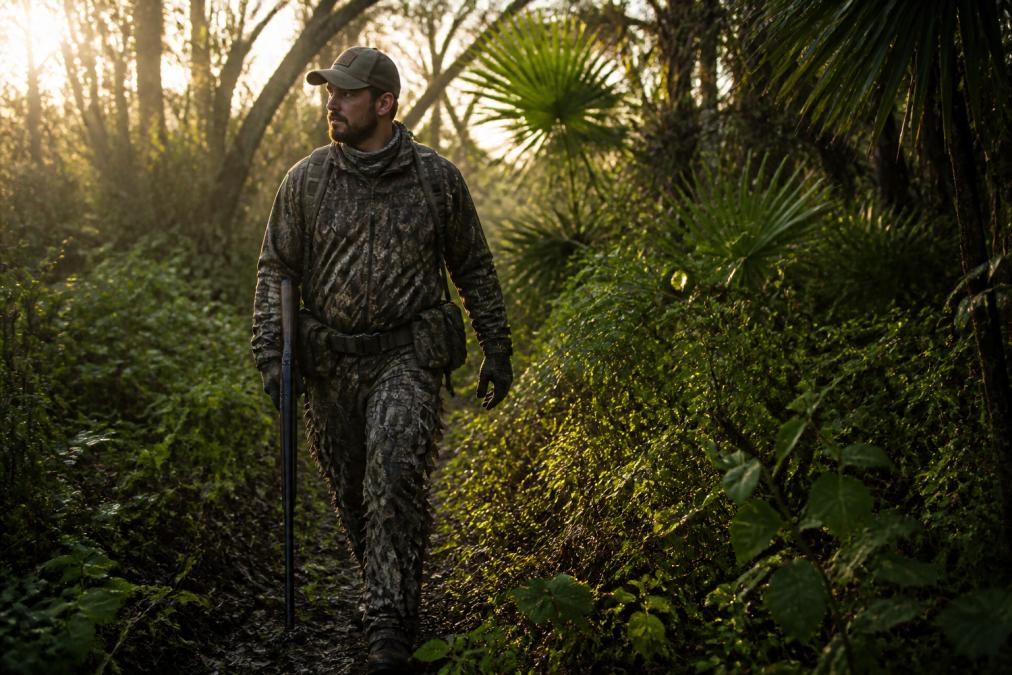
The environment hogs call home is unforgiving. You will be pushing through briars, cactus, and dense, thorny brush that will shred cheap cotton. Durable hunting apparel for brush is not a luxury; it is a necessity. You need brush pants and jackets made from heavy-duty materials like ripstop nylon or Cordura. These fabrics are water-resistant and can stand up to the punishment of a stalk through a clearcut. Wearing a cut vest is also vital when hunting with dogs, as it protects your torso from accidental cuts and tusk swipes.
Scent control is another layer of the equation. While a hog's eyesight is weak, its sense of smell is incredible. You should use a layering system. Start with a moisture-wicking base layer to keep sweat off your skin. Over that, add a durable mid-layer. This is where your personal style and the hunting lifestyle meet. A quality hunting shirt, like the Camo Long Sleeve from American Predator Gear, offers a moisture-wicking, tag-free design that keeps you comfortable during a long stalk. It is built from 100% polyester with a Realtree EDGE print. Pair this with a hoodie for those cool, pre-dawn sits.

Essential Hog Hunting Accessories: Calls, Lights, and More
Beyond the big-ticket items, the essential hog hunting accessories are what make a hunt efficient. A good headlamp is non-negotiable for navigating back to the truck in the dark. Look for one with a red light mode to preserve your night vision. A reliable GPS navigation device or app on your phone is critical for marking your stand location and tracking your path through unfamiliar territory, especially if you are blood trailing in the dark.
Hog calls can be effective, but they aren't the magic bullet some think. A simple squeal or grunt call can pique a hog's curiosity, but learning to use it effectively takes practice. More important is your sidearm. When hunting with dogs or in thick cover, a hog can close the distance fast. A powerful sidearm in a caliber like 10mm or .44 Magnum serves as your last line of defense. It provides peace of mind and a quick follow-up shot if you need it.
Post-Harvest Processing Gear and Field Dressing
The hunt doesn't end with the shot; it ends with the meat in the cooler. Field dressing a hog is a messy, physical job, and you need the right tools. A sharp skinning knife with a gut hook is essential. A dull knife is dangerous and makes the job twice as hard. You'll also want a bone saw to split the pelvis and sternum. Bring a length of rope and a gambrel or sturdy tree branch to hang the animal for easier access to the body cavity.
For the best hunting gear for hog hunters, efficiency in the field matters. Keep a roll of paper towels, a large cooler with ice, and game bags ready. A good pair of cut-resistant gloves protects your hands from the knife and any sharp bone fragments. Once the animal is skinned and quartered, using game bags keeps the meat clean and allows it to cool quickly, which is vital for meat quality. This processing gear ensures that your hard work in the field results in a quality meal for your family.
Conclusion: Build Your Hog Hunting Kit
Hog hunting is a lifestyle that demands gear as tough as the animal itself. Building your kit takes time, but focusing on the fundamentals, a reliable rifle in a proper caliber, thermal optics for the night shift, and durable, scent-conscious apparel, will set you up for success. The reality is that hogs are relentless, and your gear must be just as relentless. As you plan your next hunt, consider the stories you want to tell around the campfire and the gear that will help you live them.
At American Predator Gear, we support the outdoor lifestyle and the hunters who live it. We know the struggles and the reality of being in the field, and we design apparel that honors that grit. Our signature lines, including the Squeal Team Six and Oinkin From The Boinkin tees, celebrate the humor and the hard work of the hunt. When you are gearing up, remember that the right shirt is the one that tells your story. Shop American Predator Gear and find apparel that keeps up with your adventures.

Frequently Asked Questions
What is the best setup for hog hunting?
The best hog hunting gear setup starts with a dependable rifle in a proven caliber like .308, 6.5 Creedmoor, or .223 for smaller pigs. Pair it with a quality optic, preferably a thermal or night vision scope if you hunt after dark. Wear durable hunting apparel for brush that protects against thorns and cuts, and use scent control clothing to keep from alerting hogs. A good game camera helps you scout patterns before you head out.
Is 308 overkill for hogs?
No, .308 Winchester is a solid choice for hog hunting gear. It is not overkill when you consider the toughness of mature boars. The .308 offers excellent penetration and energy at typical hunting ranges, which translates to ethical harvests and fewer lost animals. It is a versatile round that works well for hogs, deer, and other game. If you prefer less recoil, a 6.5 Creedmoor or .243 also performs well on hogs.
What should I wear hog hunting?
Wear durable hunting apparel for brush, including a tough outer layer of canvas or ripstop material to protect against briars. Choose a camo pattern that matches your terrain, and always prioritize scent control with an outer layer that blocks or absorbs odor. For warm climates, breathable layers are essential; for cold nights, add insulation. Footwear should be water-resistant with good ankle support for rough ground.
Do I need specialized gear for night hog hunting?
Yes. Hogs are primarily nocturnal, so adding thermal optics or night vision to your hog hunting gear list is a major advantage. Thermal scopes let you spot hogs by their heat signature in total darkness, even through light brush. A good headlamp with a red or green light mode helps you navigate safely without spooking game. A suppressor is also useful for night hunts to reduce noise and protect your hearing.