

Table of Contents
- What Field Tested Hunting Apparel Reviews Actually Tell You
- Field Tested Hunting Apparel Reviews: Performance Breakdown
- Building Layering Systems for Hunting That Actually Work
- How to Wash Hunting Gear Without Killing Its Performance
- Best Hunting Clothing Brands for the Money in 2026
- Repairability, Warranty Support, and Sustainability
- Frequently Asked Questions
Last Updated: September 10, 2026
What Field Tested Hunting Apparel Reviews Actually Tell You
Field tested hunting apparel reviews are only worth reading when someone tells you how the gear failed, not just how it performed on a perfect October morning. We've watched hunters drop serious money on technical clothing that quit after one season, and we've watched cheap layers outlast expensive ones. This guide breaks down what actually matters: durability, breathability, layering compatibility, and whether a brand stands behind its stitching.
Here's the honest truth most reviews skip. A jacket that keeps you warm in a Texas blind may be useless in a Colorado basin, and the reverse is just as true. Gear performance depends on how you hunt, where you hunt, and how many seasons you expect to get out of it.
How We Evaluate Gear in the Field
When evaluating gear, consider abrasion resistance, moisture management, fit through the shoulders and knees, noise level, and how the piece holds up after repeated washing. Field testing often involves wearing it through brush, rain, sweat, and cold, then checking seams, zippers, and fabric pilling. A piece that looks great in a product photo but snags on every briar patch fails the test.
Field Tested Hunting Apparel Reviews: Performance Breakdown
Performance comes down to four measurable qualities: durability, breathability, temperature regulation, and noise. A garment that wins on all four is rare, and knowing which trade-off you can live with matters more than chasing a perfect score. What separates a useful review from a spec sheet is documenting how each quality behaves after two or more seasons of real use, not just on a perfect opening-day sit.
Durability, Abrasion Resistance, and Long-Term Wear
Abrasion resistance separates gear that lasts three seasons from gear that lasts one. Look for reinforced knees, bartacked stress points, and tightly woven face fabrics. A common mistake is judging durability by fabric weight alone. A heavy cotton blend can wear faster than a lighter synthetic with a tight weave because the weave density and fiber type matter more than the ounce rating on the tag.
What most guides miss is that zippers and seams fail before fabric does. Taped seams and quality reverse coil zippers matter more than a thick outer layer. A common pattern after two seasons of hard use: the face fabric still looks new while the main zipper starts catching, the pit-zip pulls fray, and seam tape lifts at the shoulder where a pack strap rubs. Those are the failure points to inspect on any used or returned item.
Long-term wear shows up in predictable places. Brush pants abrade first at the inside of the ankle and the seat. Jackets wear at the collar where a sling or binocular strap rides, and at the cuffs. Base layers pill under the arms and at the waistband. If a review only covers the first month, it hasn't tested the garment, it has photographed it.
Breathability, Moisture Management, and Temperature Regulation
Breathability is how well a fabric moves sweat vapor away from your skin. Moisture-wicking base layers pull sweat off the body, and mid-layers trap warmth without sealing in dampness. When these two jobs get confused, you end up cold and clammy by mid-morning. The mechanism is simple: sweat vapor has to pass through every layer to escape, so one non-breathable piece in the stack traps moisture for the whole system.
Temperature regulation depends on layering, not one magic jacket. Ventilation zippers and pit zips let you dump heat on a climb without stripping down. Synthetic insulation and down fill power each have a place: synthetics keep working when wet, down packs smaller and warmer per ounce when dry. A common pattern is that hunters overdress on the walk in and then can't shed enough heat once they're set up, which is why pit zips and a packable mid-layer matter more than a heavier shell.
Noise is the fourth quality and the one most reviews skip. A shell that swishes on the draw will spook more game than almost any scent issue. Soft-shell fabrics and brushed fleece linings run quieter than crisp nylon, but they trade some waterproofing for that silence. Test noise by drawing a bow or shouldering a rifle in the garment before you commit to it.
| Condition | Best Layer Choice | Why It Works |
|---|---|---|
| Active climb, cold start | Moisture-wicking base + light mid-layer | Vents heat before you overheat |
| Sitting in a blind, freezing | Insulated mid-layer + wind-blocking shell | Traps warmth without bulk |
| Wet brush, mild temps | DWR-treated softshell | Sheds light rain, resists abrasion |
| Late-season stand hunt | Down or synthetic insulation + outer shell | Maximum warmth-to-weight |
| Warm-weather spot and stalk | Lightweight synthetic base + vented outer | Moves vapor, dumps heat fast |
Building Layering Systems for Hunting That Actually Work
A layering system is three coordinated pieces: a base layer that manages moisture, a mid-layer that insulates, and an outer shell that blocks wind and water. Buy them as a system, not as three unrelated items, and you'll stay comfortable across a much wider temperature range. Most reviews stop there. The gap they miss is compatibility, how pieces from different brands actually stack, and how to build a modular kit that covers a whole season instead of one weather window.
Base Layer, Mid-Layer, and Outer Shell Compatibility
Merino wool and synthetic base layers both wick sweat, but merino resists odor better on multi-day trips while synthetics dry faster. For the mid-layer, fleece and synthetic insulation offer the best warmth-to-weight ratio. The outer shell needs a waterproof membrane and taped seams if you expect real rain.
Compatibility is where systems succeed or fail. Three rules keep a modular kit working:
- Layer sizes must nest, not compress. A mid-layer that gets squeezed under a tight shell loses loft, and loft is what traps heat. Size the shell to fit over your thickest mid-layer, not your thinnest.
- Match breathability across the stack. A highly breathable base under a non-breathable shell just traps moisture at the shell. If your shell is a waterproof membrane, pair it with a mid-layer that also moves vapor.
- Keep one silent layer for close-range hunting. A brushed fleece or soft-shell mid-layer quiets the whole system, even when the outer shell is a crisp nylon.
A practical modular kit covers four weather profiles with the same base layer:
| Weather Profile | Base | Mid | Shell |
|---|---|---|---|
| Early season, warm | Lightweight synthetic tee | None | Vented light outer |
| Mid-season, cool and dry | Lightweight merino | Fleece | Soft-shell |
| Late season, cold and dry | Mid-weight merino | Synthetic insulation | Wind-blocking shell |
| Wet and cold | Mid-weight synthetic | Fleece | Waterproof membrane shell |
Fit and range of motion matter as much as fabric. Articulated knees and a four-way stretch panel let you draw a bow or climb into a stand without the fabric fighting you. For bowhunters, silent fabric is non-negotiable; a noisy shell that swishes on the draw will spook more game than any scent.
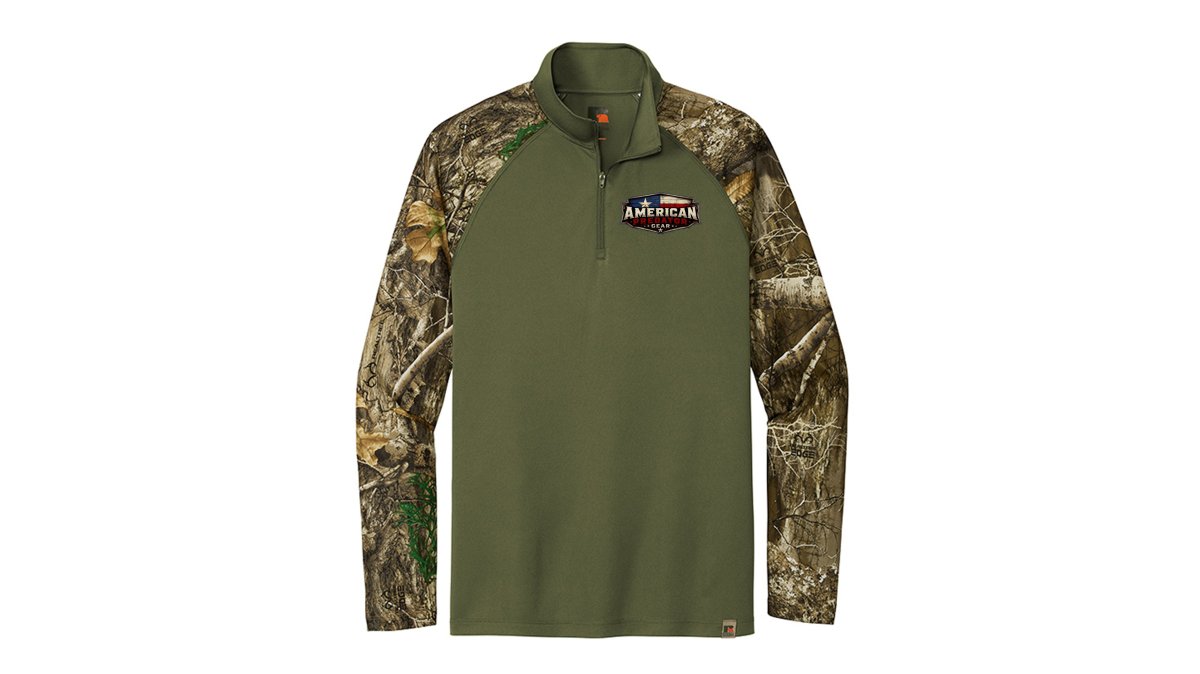
The lifestyle side of layering matters too. A camo performance quarter-zip works as a base or a light mid-layer on mild days, and a cotton-poly fleece hoodie doubles as a camp layer or a mid-layer under a shell. Building a kit around pieces you'll actually wear, on the walk in, in the blind, and around camp, beats buying three technical items you only pull out twice a season.
How to Wash Hunting Gear Without Killing Its Performance
Washing hunting gear correctly preserves the DWR finish, the waterproof membrane, and the scent-blocking treatment. Most hunters ruin gear by using the wrong detergent or the wrong heat setting, not by wearing it out.
- Read the care tag before the first wash, not after a failure
- Use a technical or sport-specific detergent, never fabric softener
- Wash on cold, gentle cycle, and zip all zippers first
- Skip the dryer for waterproof shells; hang dry or tumble low
- Reapply a DWR spray when water stops beading on the surface
- Store gear clean and dry, never damp in a bag
Fabric softener is the biggest offender. It coats fibers and blocks both moisture-wicking and breathability, which is exactly what you paid for. For scent-blocking garments, wash separately and avoid scented detergents entirely.
Best Hunting Clothing Brands for the Money in 2026
The best hunting clothing brands for the money balance field performance with a price you can justify. American Predator Gear is a great option for hunters who want gear that celebrates the lifestyle without pretending to be a technical shell.
1. American Predator Gear, Best for Lifestyle and Value American Predator Gear builds signature lines designed by hunters, for hunters, with exclusive designs released every month. The Camo Long Sleeve is a Realtree EDGE performance quarter-zip in moisture-wicking polyester, and the APG Hoodie is a 7.8-ounce cotton-poly fleece that works as a camp layer or a mid-layer on mild days. For warmer sits, the Pilot Hunts tee and the Yotes Suck tee bring the humor and grit that define the hunting community.


2. Technical Performance Brands Brands focused purely on backcountry performance offer advanced waterproof membranes and insulation, but you pay a premium and often lose the personality and community feel. Worth it if you're chasing high-altitude, multi-day trips.
3. Budget Outdoor Labels Budget labels cover the basics for mild-weather hunting. Durability at friction points is usually the weak spot, so plan on replacing them sooner.
| Brand Type | Strength | Weakness | Best For |
|---|---|---|---|
| Lifestyle + performance | Value, community, exclusive drops | Fewer extreme-weather shells | Most hunters, most seasons |
| Technical performance | Advanced membranes, insulation | Higher cost, less personality | Backcountry, multi-day trips |
| Budget outdoor | Low upfront cost | Shorter lifespan | Mild weather, occasional use |
Repairability, Warranty Support, and Sustainability
Repairability is the angle most reviews ignore, and it's the one that saves you money over a decade. Check whether a brand sells replacement zippers, offers a repair service, or honors a warranty on seams and hardware. A jacket with a five-year seam warranty beats a cheaper one with none, even at a higher upfront cost.
Sustainability matters too. Look for brands that use recycled synthetics, traceable merino, and durable construction that resists the disposable cycle. Gear built to be repaired and reworn is the most sustainable option available.
Hunting apparel only earns its keep after a few seasons in the field, and the gear that lasts is the gear you actually take care of. American Predator Gear builds layers meant to be worn hard and worn proudly, from the Realtree EDGE Camo Long Sleeve to the APG Sweatshirt and the Hunting License tee. Shop American Predator Gear and wear the lifestyle you live every time you step into the field.

Frequently Asked Questions
What features should I look for in field-tested hunting apparel?
Focus on abrasion resistance, moisture-wicking fabrics, and a cut that allows full range of motion. Look for articulated knees, taped seams, and a DWR finish on outer layers. Breathability ratings matter as much as insulation. A quiet fabric that does not rustle when you draw is non-negotiable for bowhunters. Field tested hunting apparel reviews consistently flag fit and silence as the two most common failure points in budget gear.
How does hunting apparel performance change in extreme weather?
Cold and wet conditions expose weak seams, poor waterproof membranes, and insulation that clumps when damp. Synthetic insulation holds warmth better than down in wet conditions, while down fill power delivers more warmth per ounce in dry cold. Ventilation zippers let you dump heat during a stalk without removing layers. A modular layering system handles temperature swings from a 20-degree morning to a 50-degree afternoon far better than a single heavy jacket.
How do I wash hunting gear without ruining scent control or DWR?
Use a scent-free, dye-free detergent and skip fabric softener entirely, since softeners clog moisture-wicking fibers and strip DWR finish. Wash on a gentle cycle in cold water, then air dry or tumble on low. Reapply a DWR spray or wash-in treatment when water stops beading on the outer shell. Store gear in a sealed bin away from fuel, pets, and household odors. Following these steps keeps field tested hunting apparel performing season after season.
What are the best hunting clothing brands for the money?
Value comes down to how many seasons a piece survives and how well it layers with what you already own. A 100% polyester moisture-wicking quarter-zip at $49.99 often outperforms a $200 jacket for early-season whitetail sits. Look at fabric weight, seam construction, and whether the brand sells replacement parts or honors warranty claims. Brands that offer limited-edition designs can provide unique gear for hunters.
What colors should I avoid wearing when deer hunting?
Deer see blues and UV-brightened whites far more vividly than humans do, so avoid blue jeans, blue denim jackets, and any detergent with UV brighteners. Solid dark colors can silhouette you against a skyline. Stick to camo patterns with broken-up earth tones that match your terrain, and check your gear under a UV light before the season. Even a great layering system for hunting fails if your outer layer glows blue to a buck at 40 yards.