

Table of Contents
- Why Layering Beats One Heavy Jacket
- The Three-Layer System: How to Layer for Hunting
- Best Hunting Apparel for Cold Weather: Fabrics That Work
- How to Stay Warm in a Tree Stand
- Layering for Spot-and-Stalk and Active Hunting
- Common Layering Mistakes That Cost You Warmth
- Caring for Technical Fabrics So They Last
- Conclusion
- Frequently Asked Questions
Last Updated: September 13, 2026
Why Layering Beats One Heavy Jacket
Learning how to layer for hunting starts with one hard truth: a single heavy jacket is the worst system you can carry. It traps sweat on the walk in, then leaves you nothing to adjust once you stop.
Ask anyone who has logged real seasons: the hunter in a heavy parka who sweats through the hike ends up colder than the guy in three thin, cheap layers. Trapped moisture pulls heat from your core faster than dry air.
This guide from American Predator Gear breaks down a layering system that works whether you are sitting a treestand in a January cold snap or chasing elk up a mountain in September. Get each layer's job right and you stay warm without bulk or noise.
The National Weather Service cold safety guidance is blunt about it: wet clothing loses its insulating value, and wind strips heat even faster. That is the whole argument for layering in two sentences.
The Three-Layer System: How to Layer for Hunting
The three-layer system is a base layer that moves sweat off your skin, a mid layer that traps heat, and an outer layer that blocks wind and weather while letting vapor escape. Think of it as a dial, not a switch: dress for temperature plus activity level plus wind. A treestand sit and a spot-and-stalk climb are different problems, even on the same 25-degree morning.
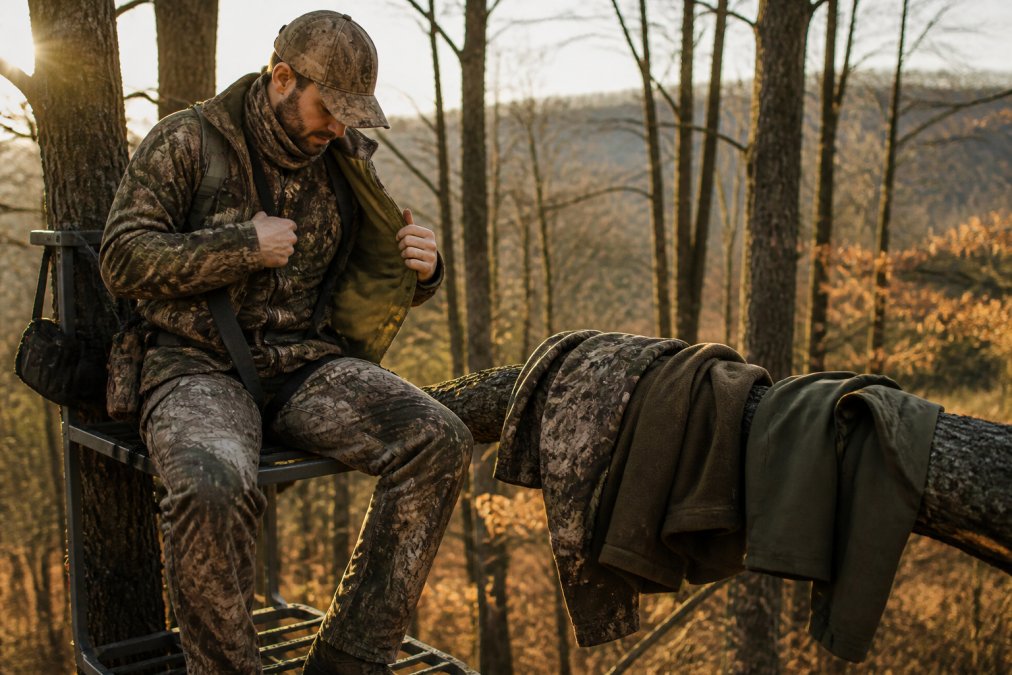
Here is the short version before we go layer by layer:
| Layer | Job | Go-To Fabric | When to Shed It |
|---|---|---|---|
| Base | Move sweat off skin | Merino wool or synthetic | Almost never |
| Mid | Trap heat, stay breathable | Fleece or puffy | During the walk in |
| Outer | Block wind and wet | Softshell or shell with DWR | Only if it goes dead calm |
Base Layer: Moisture-Wicking Base Layers for Hunting
Moisture-wicking base layers for hunting are the foundation of the whole system, and the layer most guys get wrong. Cotton soaks up sweat and holds it against your skin, exactly what you do not want when you stop moving. Go with merino wool or a quality synthetic: merino regulates temperature and resists odor over multi-day trips, while synthetics dry faster and cost less. Fit matters too, snug enough to pull moisture, loose enough not to restrict your draw, and no bunching at the shoulder if you bowhunt.
Mid Layer: Insulation and Heat Retention
The mid layer is your heat retention engine, and fleece or a light puffy does the job best. Add it when you sit, shed it when you move. Active insulation breathes while you move and holds warmth when you stop, and an articulated fit lets you draw a bow or shoulder a rifle without fighting the fabric. Your mid layer should be the most adjustable piece you own, carry it, do not wear it on the hike.
Outer Layer: Weather Protection That Breathes
Your outer shell blocks wind and water while letting sweat vapor escape, and that balance is the whole game. A waterproof-but-unbreathable shell turns into a sauna; a breathable shell that does not block wind leaves you shivering on an exposed ridge. Look for a softshell for active days and a quiet shell with DWR for wet, windy sits. DWR makes light rain bead up and roll off, and it wears out over time. Quiet matters too, a crinkly shell that sounds like a chip bag on every shift will cost you more deer than the cold ever will.
Best Hunting Apparel for Cold Weather: Fabrics That Work
The best hunting apparel for cold weather balances moisture management, heat retention, and breathability. Here is how the main fabrics stack up:
- Merino wool: Best temperature regulation and odor control, costs more, dries slower
- Synthetic polyester: Fastest drying, cheapest, holds odor over multi-day trips
- Fleece: Great loft and warmth for the weight, not windproof on its own
- Down: Unbeatable warmth-to-weight, useless when wet
- Synthetic puffy: Nearly as warm, keeps working when damp, bulkier
For a do-everything cold-weather kit, pair a merino or synthetic base with a fleece mid and a breathable shell. That handles everything from a 40-degree October bowhunt to a single-digit December sit. American Predator Gear builds gear for hunters who live this stuff, and the APG Hoodie is the kind of mid-weight layer that earns its spot in the truck, a 7.8-ounce cotton-poly fleece with a front pouch pocket, solid for camp and scouting in the shoulder seasons.

How to Stay Warm in a Tree Stand
Knowing how to stay warm in a tree stand comes down to one rule: dress for the walk, not the sit. If you are warm when you climb, you are overdressed and you will pay for it two hours later. Hike in with your base layer only, or base plus a light fleece, and carry your mid and outer layers in your pack. Once you are settled and cooled down, add them back one at a time.
A few treestand-specific moves that make a real difference:
- Add a puffy mid layer the moment you stop moving
- Use a windproof outer shell, because wind chill at height is brutal
- Keep a spare dry base layer in your pack for the walk out
- Wear a neck gaiter and a warm hat, since you lose a lot of heat through your head and neck
The Sit Is a Low-Exertion Problem
Once you stop moving, your body stops producing meaningful heat. A treestand sit is low-exertion, so your system has to retain heat you already made. That is why a puffy mid layer works so well on a sit and so poorly on a climb: it traps heat but does not breathe enough to dump sweat while you move. Order matters too, add the puffy first, then the shell. The puffy traps your body heat; the shell keeps wind from stripping it away.
Cold Feet End More Sits Than Cold Hands
Cold feet end more sits than cold hands, and feet are the part of the layering system most guides ignore. Your feet are a layering system of their own: a thin moisture-wicking liner sock against the skin, then a wool or synthetic insulating sock over it, inside a boot sized to fit both without cramping your toes.
A few footwear rules that hold up in a stand:
- Size boots for your thickest sock, not your thinnest. A cramped boot cuts circulation, and poor circulation means cold feet no matter how good the sock is.
- A liner sock plus an insulating sock moves moisture the same way a base layer plus mid layer does on your torso.
- Change socks if your feet sweat on the walk in. A dry pair mid-sit is a real reset.
- Keep boots off the metal platform when you can. Metal pulls heat out of a boot sole fast.
A Budget-Conscious Treestand System
You do not need top-shelf gear to sit warm. A workable entry-level system is a synthetic base layer, a mid-weight fleece mid layer, a quiet windproof shell, plus a liner sock and a wool sock. Most of that can come from general-purpose outdoor gear rather than hunting-specific brands. Spend up on the base layer and the socks, since those two pieces manage moisture, and moisture is what beats you. The mid layer and shell can be plain and inexpensive as long as they trap heat and block wind.
Layering for Spot-and-Stalk and Active Hunting
Spot-and-stalk hunting flips the layering script because you are moving almost constantly. Breathability beats insulation, and you want the least bulk you can get away with. Run a light base layer and a breathable softshell, and skip the heavy puffy unless you are glassing for long stretches. When you stop to glass, throw on the puffy mid layer, then strip it the second you move again.
The Stop-and-Go Problem
Spot-and-stalk is not one activity. It is a cycle: climb, creep, stop, glass, climb again. Each phase changes how much heat your body makes, and the mistake is dressing for the average of those phases instead of switching between them. The practical system is a two-state setup. Moving: base layer plus a breathable softshell, nothing more. Glassing: add the puffy mid layer the moment you stop, and shed it the moment you move. A light puffy that packs into its own pocket is worth carrying because you will add and remove it a dozen times a day. Articulated fit means the fabric is cut to move with your joints, so you can crawl, climb, and draw without the gear fighting you, for bowhunters, the difference between a clean shot and a blown opportunity.
Why Venting Beats Shedding on the Move
When you are climbing hard, you often cannot stop to take a layer off without losing the animal. That is when venting earns its keep: pit zips, a front zip, and an openable hood let you dump heat without removing anything. Open the vents on the climb, close them when you slow down.
Experienced spot-and-stalk hunters start the climb slightly cold. If you are comfortable in the first five minutes, you are carrying too much insulation and you will be soaked by the top.
Your Feet Are Part of the System
Your feet are part of the layering system, and it matters more on spot-and-stalk than anywhere else. A moisture-wicking sock liner plus a wool sock in a boot matched to the terrain keeps your feet dry, and dry feet stay warm. On steep ground, a boot that is too stiff or too loose will rub and blister long before the cold bothers you, so match the boot to the terrain and the sock to the boot.
A Budget-Conscious Active System
Active hunting is where you can save the most money, because you need less insulation. A light synthetic base layer, a breathable softshell, and a packable light puffy cover most spot-and-stalk conditions. The softshell does the heavy lifting, so it is the one piece worth spending on. The base layer and puffy can be plain, general-purpose gear.
Common Layering Mistakes That Cost You Warmth
Most layering failures trace back to a handful of repeat mistakes. Fix these and your system gets dramatically better.
- Wearing cotton anywhere in the system. It holds sweat and kills insulation. Swap it out.
- Dressing for the walk instead of the sit. You overheat, sweat, then freeze.
- Skipping the base layer's fit. Too loose and it cannot wick. Too tight and it restricts movement.
- Ignoring wind. A calm 30 degrees and a windy 30 degrees are different animals.
- Forgetting the extremities. Head, neck, hands, and feet lose heat fast.
- Never venting. If you have pit zips or a front zip, use them before you overheat.
The pattern behind all of these is the same: hunters treat layers as a fixed outfit instead of an adjustable system. The guys who stay warm all day are constantly tweaking, adding a layer here, opening a vent there.
Caring for Technical Fabrics So They Last
Technical fabrics only perform if you maintain them, and DWR is the treatment that fades first. When water stops beading and starts soaking in, your shell has lost its edge. The fix is a wash with a technical fabric cleaner and a tumble dry on low, which reactivates the DWR. Check your care tag first.
A few care habits that add seasons to your gear:
- Wash technical layers with a cleaner made for them, never regular detergent
- Skip fabric softener entirely, since it clogs the breathable membrane
- Air dry when you can, and store gear clean and dry
- Repair small tears early before they spread
Merino needs a gentler hand than synthetics. Wash it cool and lay it flat to dry. Treat your layers right and a good system lasts years, not one season.
Conclusion
A layering system you trust is worth more than any single expensive jacket. Get the base, mid, and outer layers right, dress for the walk instead of the sit, and you will stay warm through the coldest mornings the season throws at you.
American Predator Gear exists for hunters who live this lifestyle, not just shop for it. Our designs are created by hunters for hunters, with signature lines like Sounder Pounder, Smokin Yotes, and Trash Panda, plus new limited-edition drops every month. Whether you need a mid-weight layer like the APG Hoodie or a tee that says what you mean, we have you covered. Shop American Predator Gear and gear up for the field with apparel built by people who have been there.
Frequently Asked Questions
What is the best layering system for hunting?
A three-layer system works best: a moisture-wicking base layer against your skin, an insulating mid layer like fleece or a puffy jacket, and a weatherproof outer shell. This setup lets you add or remove layers as conditions change. For cold-weather hunts, add a heavier base layer and thicker insulation. The goal is to stay dry, warm, and flexible so you can sit still or move without overheating.
Why is cotton a bad choice for hunting base layers?
Cotton absorbs sweat and dries slowly, which pulls heat away from your body and raises your risk of hypothermia. Once cotton gets wet, it stays wet and loses insulation value. For hunting, choose moisture-wicking base layers made from merino wool or synthetic fabrics. These move sweat away from your skin and dry quickly, keeping you warm even during active hikes to your stand.
How do you prevent overheating while hiking to your stand?
Start with fewer layers and add them once you're settled. Vent your outer shell or unzip your mid layer during the hike. Choose breathable fabrics that release heat and moisture. If you arrive sweaty, you'll get cold fast. Many hunters carry their insulation layer in a pack and put it on after they cool down. This keeps your core temperature steady and avoids the chill that follows a sweat.
How should you adjust your layers for bowhunting versus rifle hunting?
Bowhunting demands layers that don't restrict your draw. Look for articulated fit and stretch fabrics in the arms and shoulders. Avoid bulky puffy jackets that catch the string. Rifle hunters have more freedom but still benefit from quiet, low-bulk layers. In both cases, use a moisture-wicking base layer, a flexible mid layer, and a quiet outer shell. Test your draw with all layers on before the season starts.